If you’ve ever spent time working in industries like construction, mining, firefighting, or industrial fluid transfer, you’ve probably wondered about the safety of the equipment you rely on most. For suction hoses—the unsung workhorses that move everything from water and slurry to fuel and chemical liquids—one question comes up time and again: What is the flammability rating of a suction hose? As a supplier who’s worked with these hoses for over a decade, I’ve fielded this question from operators, safety managers, and even new engineers still learning their trade, and the answer isn’t as simple as a single number. It depends on a mix of materials, industry standards, and the specific environment the hose will operate in. Let’s break this down, not just with technical facts, but with the practical context that only someone who sells and tests these hoses knows. Suction Hose

First, let’s get one thing straight: Suction hoses aren’t built the same as air hoses or hydraulic lines. Their design is unique because they rely on internal pressure differential to pull fluid, so their structure has to balance flexibility, kink resistance, and durability. But their outer and inner layers? Those are what determine flammability, and manufacturers choose them based on what the hose will be moving. For example, if a suction hose is for transferring gasoline or diesel, the inner tube has to resist fuel degradation, but it also has to be non-flammable or self-extinguishing to prevent sparks or friction from igniting the fluid during transfer. If it’s for clean water, the material rules are less strict for flammability, but still matter in environments where the hose might come into contact with welding sparks or hot equipment.
Now, flammability ratings for hoses aren’t just made up by brands. They’re tied to global industry standards that dictate testing procedures and minimum performance levels. The most common standards we reference as a supplier are NFPA (National Fire Protection Association) standards, especially NFPA 1961 for fire hoses, ASTM International’s D3756 for rubber and plastic hoses used in general industrial applications, and ISO 14902 for petroleum and petroleum product transfer hoses. Each of these sets different pass/fail criteria, and the rating tells you how a hose behaves when exposed to a flame, not just whether it catches fire.
Let’s start with NFPA standards, because they’re the gold standard for high-risk environments like firefighting, where suction hoses might be used to draft water from ponds or fire hydrants. NFPA 1961 requires fire service suction hoses to have a “Class A” flammability rating, which means they’re self-extinguishing. How does that test work? It involves exposing a 12-inch section of the hose to a 1,500°F flame for 15 seconds, then removing the flame. If the hose continues to burn for more than 2 seconds after the flame is removed, it fails. I remember a few years back, we had a customer who bought a cheap, unrated hose for their fire department’s backup draft line, and during a training drill, it caught fire from a stray welding spark that landed on the outer jacket. The hose burned for 12 seconds, melted through, and lost suction mid-drill. That’s when the customer switched to our NFPA 1961-rated hoses, which pass the self-extinguish test every time. It’s not just about meeting a standard—it’s about keeping crews safe when every second counts.
For industrial suction hoses, the ASTM D3756 standard is the key. This standard covers general-purpose hoses, and flammability ratings here range from “self-extinguishing” to “ignition-resistant” to “non-flammable.” Let’s define those terms because they’re often confused. A self-extinguishing hose will stop burning on its own once the ignition source is removed. An ignition-resistant hose won’t ignite easily when exposed to a small flame, and if it does, it won’t spread the flame along its length. A non-flammable hose, the highest rating, won’t burn at all even when exposed to a high-temperature flame for an extended period. Most industrial suction hoses fall into the first two categories, because non-flammable materials are much heavier and less flexible, which makes them hard to handle on job sites. But when a customer is transferring flammable liquids like jet fuel, they’ll often ask for the ignition-resistant rating per ISO 14902, which is specific to petroleum transfer. That standard requires hoses to resist ignition from static sparks, which are a huge risk when you’re transferring volatile fuels—static electricity builds up as fuel moves through the hose, and a single spark can cause a catastrophic fire. We test all our petroleum suction hoses to ISO 14902, and I’ve seen customers run third-party tests where a static spark generated inside the hose doesn’t ignite the outer layer. That’s the difference between a safe hose and a liability.
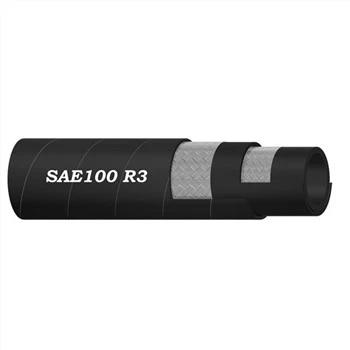
It’s also important to note that flammability rating isn’t universal across a single hose. Most suction hoses have three layers: inner tube, reinforcement, and outer jacket. The inner tube is often made of synthetic rubber (like nitrile for fuel) or PVC for water. The reinforcement is usually polyester or steel wire, and the outer jacket is the part that’s exposed to the environment. Some hoses have different ratings for each layer, but the flammability rating we reference is almost always for the outer jacket, because that’s the part that’s exposed to flames, sparks, or hot surfaces. The inner tube might be resistant to fuel, but if the outer jacket catches fire, it can compromise the entire hose’s integrity. For example, a PVC suction hose for water might have an outer jacket that’s self-extinguishing, even though the inner PVC itself is somewhat flammable. That’s a deliberate design choice, and it’s something we always explain to customers so they know exactly what they’re buying.
Now, let’s talk about common misconceptions I hear every day. The biggest one is that all rubber hoses are non-flammable. Nope. Cheap, unregulated rubber hoses that cost a few dollars less often use low-grade, untested materials that can burn easily. We’ve had customers come to us after using a “generic” suction hose that caught fire on a job site, and when we tested the material, it failed the NFPA 1961 test by burning for 18 seconds after the flame was removed. That’s why I always emphasize: don’t just go for the lowest price. A flammability rating isn’t a marketing gimmick—it’s data. Another misconception is that a higher rating is always better. If you’re using a suction hose to pump clean water at a construction site, a non-flammable hose is overkill. It’s heavier, more expensive, and harder to maneuver, which can slow down your crew. But if you’re working in a refinery or near welding operations, that higher rating is worth every extra dollar to prevent a fire.
So, how do you find the right flammability rating for your suction hose? Start with your application. What are you transferring? Where will the hose be used? Let’s break it down by common use cases:
- If you’re drafting water for firefighting or industrial cleanup: Look for a hose rated to NFPA 1961 (self-extinguishing, Class A). This is the most common for fire departments and construction sites where hot work is present.
- If you’re transferring petroleum products (gas, diesel, jet fuel, oil): Go for a hose rated to ISO 14902 (ignition-resistant) or ASTM D3756 Class B. These are tested to resist static sparks and small flames, which are the biggest risks for fuel transfer.
- If you’re transferring chemicals or hazardous fluids: Check with your chemical’s safety data sheet (SDS) and look for a hose with a flammability rating that matches the OSHA requirements for your facility. Many chemical suction hoses have a non-flammable outer jacket for extra safety.
- If you’re moving non-flammable fluids (clean water, slurry, concrete): A self-extinguishing or even standard (untreated) hose might work, but we still recommend a rated jacket if your job site has regular hot work or is in a dry, fire-prone area.
As a supplier, we don’t just sell hoses and hand them off. We work with every customer to match the right flammability rating to their needs. Last year, a small mining company came to us with a problem: they were using unrated suction hoses to pump diesel for their generators, and they’d had two near-misses where static sparks from the hose almost ignited the fuel. We showed them our ISO 14902-rated petroleum suction hoses, explained the test criteria, and even provided a third-party test report to confirm the rating. They placed an order for 50 hoses, and a few months later, their safety manager reached out to say the new hoses had already prevented a fire when a stray spark from a grinder landed on the hose’s outer jacket—instead of catching fire, it self-extinguished in 1.2 seconds. That’s the kind of win that makes all the technical stuff worth it.
Another thing to consider: flammability ratings aren’t permanent. Suction hoses degrade over time from UV exposure, repeated bending, and contact with chemicals. A hose that passed its flammability test when it was new might lose some of its rating after a few years of heavy use. We always recommend inspecting hoses monthly for cracks, blisters, or frayed outer jackets, and replacing them immediately if they show signs of wear that could compromise their flammability. We also advise customers to store hoses in a cool, dry area away from direct sunlight, because UV rays break down the flame-retardant additives in the outer jacket over time. I’ve seen hoses that were only two years old fail the flammability test because they were left outside in the sun all year—another reason to prioritize quality over cheap, disposable hoses.
At the end of the day, the flammability rating of a suction hose is about balancing safety, functionality, and cost. It’s not a one-size-fits-all number, and as a supplier, my job is to make sure you understand exactly what that rating means, and which one is right for your specific job. If you’re not sure which rating you need, or you have questions about testing, durability, or which hose will work for your application, don’t hesitate to reach out. We’re here to walk you through every detail, so you can choose a suction hose that keeps your crew safe, your operations running smoothly, and your budget on track.
To learn more about our suction hoses and their flammability ratings, connect with our team to discuss your project requirements.
PVC Hose References
NFPA 1961, Standard on Fire Hoses
ASTM D3756, Standard Specification for Rubber and Plastic Hose for General Industrial Service
ISO 14902, Petroleum, Petrochemical and Natural Gas Industries – Hose and Hose Assemblies for Transfer of Petroleum Products for Land Transportation
OSHA 1910.106, Flammable and Combustible Liquids Standards
Hebei Qianli Rubber Products Co., Ltd.
As one of the most professional suction hose manufacturers and suppliers in China, we have world-leading production equipment and strong manufacturing capabilities. Please feel free to buy bulk durable suction hose made in China here from our factory.
Address: West industrial Zone, Jing County, Hengshui City, Hebei Province, China.
E-mail: manager@hebeiqianli.com
WebSite: https://www.qianlirubber.com/
