Hey there! I’m a supplier of angular contact ball bearings, and today I wanna chat about what the cage of an angular contact ball bearing is. Angular Contact Ball Bearing

First off, let me set the stage. Angular contact ball bearings are pretty cool components used in a whole bunch of machinery. They can handle both radial and axial loads, which makes them super useful in stuff like machine tools, automobiles, and even some industrial robots. But the cage, well, it’s like the unsung hero that keeps everything in line.
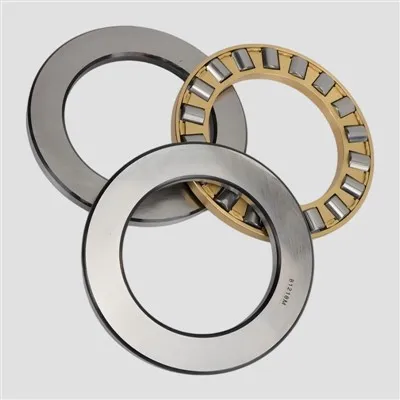
So, what exactly is the cage? In simple terms, it’s the part of the bearing that holds the balls in place and keeps them evenly spaced. You see, in an angular contact ball bearing, the balls are arranged in such a way that they can take on those radial and axial forces. But if these balls were just floating around randomly, the bearing wouldn’t work properly. That’s where the cage steps in.
The cage has two main jobs. One is to guide the balls as they roll. When the bearing is spinning, the balls need to move in a smooth and coordinated way. The cage helps them do that by providing a path for them to follow. It’s like a little track for the balls, making sure they don’t go off – course.
The other important job is to separate the balls. If the balls were all pushing against each other, it would cause a whole lot of friction. And we all know that friction is bad news. It can generate heat, which can wear out the bearing faster and even cause it to fail. By keeping the balls apart, the cage reduces this friction and makes the bearing run more efficiently.
Now, cages come in different materials and designs. One of the most common materials is steel. Steel cages are tough and durable. They can handle high – speed applications and heavy loads. They’re also pretty resistant to wear and tear, which means they’ll last a long time. A lot of our customers who need bearings for heavy – duty machinery prefer steel – cage angular contact ball bearings.
Another popular material is brass. Brass cages are a bit softer than steel ones. They have good self – lubricating properties, which is great because it helps to further reduce friction. They’re also corrosion – resistant, so they’re a good choice for applications where the bearing might be exposed to moisture or other corrosive substances.
Then there are also cages made from synthetic materials like phenolic resin. These synthetic cages are lightweight and can be made into complex shapes. They’re often used in high – speed applications because their low weight reduces the centrifugal force on the balls. And they can withstand high – temperature environments better than some of the traditional materials.
In terms of design, there are a few different types. One common design is the snap – type cage. It’s relatively easy to install and can be used in a wide range of bearing sizes. The snap – type cage fits around the balls and snaps into place, holding them securely.
There’s also the machined cage. This is a more precise and high – quality design. Machined cages are usually made from solid pieces of material and are carefully crafted to exact specifications. They offer better ball guidance and can handle higher speeds and loads compared to some other designs.
As a supplier, I’ve seen firsthand how important the right cage can be for a bearing’s performance. We’ve had customers come to us with problems in their machinery, and sometimes it’s turned out that the issue was with the cage. Maybe it was made from the wrong material for the application, or the design wasn’t suitable.
For example, a customer who had a high – speed spindle in a machine tool was experiencing some vibration and noise. When they sent us the bearings for inspection, we found that the cage was made from a material that couldn’t handle the high – speed rotation. We recommended a bearing with a synthetic cage, and after they replaced the old ones, the problem was solved. The spindle ran smoothly, and the customer was really happy.
Another time, a customer in the automotive industry was having trouble with premature wear in their bearings. It turned out that the cage design they were using wasn’t providing enough ball separation, which was causing excessive friction. We suggested a bearing with a machined cage, and that did the trick. The wear rate decreased significantly, and the overall lifespan of the bearings increased.
So, if you’re in the market for angular contact ball bearings, don’t overlook the cage. It might seem like a small part, but it can have a huge impact on how well your bearing works. When you’re choosing a bearing, think about the application. What kind of loads will it be under? How fast will it be spinning? What are the environmental conditions? All these factors will help you decide which type of cage is the best fit.
If you’ve got any questions about the cages in our angular contact ball bearings or need help choosing the right bearing for your specific application, don’t hesitate to reach out. We’ve got a team of experts here who are more than happy to assist you. Whether it’s a small – scale project or a large – scale industrial application, we’re confident we can find the perfect bearing solution for you. Let’s have a chat and see how we can work together to get your machinery running at its best.
Cylindrical Roller Bearing References
- "Bearing Handbook" by SKF
- "Mechanical Design of Machine Elements and Machines: A Failure – Prevention Perspective" by Robert L. Norton
- "Rolling Bearing Analysis" by Tedric A. Harris
Yantai Wared Bearing Co., Ltd.
As one of the most professional angular contact ball bearing manufacturers and suppliers in China, we also support customized service. Please feel free to wholesale durable angular contact ball bearing made in China here and get pricelist from our factory. For price consultation, contact us.
Address: North Street, Donglai Subdistrict, Longkou, Yantai, Shandong Province, China
E-mail: postmaster@bearingzwz.com
WebSite: https://www.bearingzwz.com/
