Hey folks, if you’ve ever spent time on a construction site or a landscaping project, you’ve probably seen a plate compactor bouncing up and down on the ground like a hyperactive gym rat mid-workout. But here’s the thing that trips up so many folks—newbies and even some seasoned contractors, too: “How deep does this thing actually compact?” I get it, it’s not like the machine has a giant sticker on it screaming the answer. As a plate compactor supplier, I’ve fielded this question a hundred times, and honestly? It’s way more nuanced than just a random number. Let me break this down like I would with a guy who just asked me for his first plate compactor. Plate Compactor

First off, let’s kill a myth right out the gate: there’s no one-size-fits-all compaction depth. I’ve had people show up thinking a “12-inch plate compactor” will magically compact 12 inches deep, and yikes—those are the same people who end up redoing a foundation twice because the base layer shifted. No, plate size matters, but not like that. The plate is the metal pad that slams against the ground, right? The bigger and heavier that plate is, the more force it can push downward. But even that’s not the end. Let’s get into the actual science here, plain and simple. Compaction depth basically depends on two big things: the weight of the compactor and the frequency (how fast it vibrates). I’ve got a mid-size plate compactor that weighs 150 lbs—usually those will get you 6 to 10 inches of depth, max. The heavy-duty ones, the 300+ lb models we sell for big jobs? Those can push 12 to 18 inches, depending on what you’re compacting.
Wait, let’s talk about what you’re compacting, because that’s the other half. If you’re pounding on loose sand, that’s way easier than dense gravel, right? Sand and silt are smaller particles, so vibration can get in between them and squeeze out the air gaps faster. For granular soils like sand or gravel, the average depth we see is 4 to 8 inches for light-duty compactors, 8 to 14 inches for medium, and up to 20 inches if you run a really heavy plate over multiple passes. Clay is trickier. Clay’s sticky, so it doesn’t move as easily. A light-duty plate will barely make a dent in clay—like 2 to 4 inches, tops. Medium to heavy ones? Maybe 6 to 10 inches, if you go over it 3 or 4 times. That’s why I always tell landscapers doing a patio base to grab a medium model, and road crews redoing a driveway to go for the heavy stuff. If you use the wrong one, you’re wasting time and money, not to mention the project failing a few months later.
Let’s get into how it actually works, because understanding that makes the depth thing make sense. Plate compactors use eccentric weights—those weird metal chunks inside the engine that spin, right? They vibrate the plate, so when the plate hits the ground, it’s not just slamming down statically, it’s bouncing up and down super fast. That vibration loosens the top layer of soil, lets particles shift into tight spaces, and then the weight of the plate pushes them back together to get rid of air pockets. The deeper you want to go, the more force you need to get those vibrations down that far. Think of it like throwing a stone in a pond: the ripples fade as they get further from the stone. Same with compaction force. So if you only have 50 lbs of machine, the ripples (compaction force) only go down 3 inches. If you have 300 lbs, those ripples go way deeper.
Now, let’s talk about common mistakes I see all the time. A lot of guys think more passes = more depth. Sort of, but not exactly. If you run a light plate over the same spot 10 times, you might get a tiny bit more depth, but you’re wasting fuel and time. At a certain point, the force of the machine just can’t push any deeper. For example, if your sand base is 12 inches thick and your light plate only does 6 inches, running it over 10 times won’t magically compact the other 6 inches. You’ll either need to use a heavier plate, or lay the base in two 6-inch layers and compact each separately. That’s another pro tip: layer thickness! Most of the time, you shouldn’t try to compact more than the machine’s max depth in one go. So if your compactor does 8 inches max, lay 8 inches of soil, compact it, then add the next 8 inches and do it again. I’ve seen guys skip this step and end up with a driveway that cracks 6 months later because the lower layer never got compacted right.
What about different types of plate compactors? Let’s split them up so you know which is for you. First, the walk-behind light-duty models—those are the ones you rent for a small patio or a backyard project, weigh 50 to 100 lbs. Their compaction depth is usually 3 to 6 inches, perfect for small jobs. Then medium-duty walk-behinds, 100 to 250 lbs, used for sidewalks, small driveways, landscaping beds. Those do 6 to 12 inches, depending on the soil. Then there are the heavy-duty ride-on plate compactors, which are like the beast of the lot, weigh 500+ lbs, used for road construction, big parking lots, large excavation jobs. Those can get 15 to 24 inches of compaction depth, no joke. I’ve had a county road crew guy tell me he uses our heavy ride-on to compact the base for new county roads, and they haven’t had a pothole issue in 2 years.
Wait, let’s talk about numbers so you have a concrete reference. We test all our compactors in our shop before sending them out, so here’s the breakdown based on our products:
- Our light-duty 90 lb walk-behind: compaction depth = 3-7 inches for sand, 2-5 inches for gravel, 1-3 inches for clay.
- Our medium 180 lb walk-behind: 7-12 inches for sand, 6-10 inches for gravel, 3-7 inches for clay.
- Our heavy 320 lb walk-behind: 10-18 inches for sand, 8-15 inches for gravel, 5-10 inches for clay.
- Our ride-on 600 lb compactor: 16-24 inches for sand, 14-20 inches for gravel, 8-14 inches for clay.
That’s not just made up—we test this using a soil density test kit, the same thing contractors use. It measures how tightly packed the soil is, so you know you’re at the right depth, not just guessing. I always tell customers, don’t go by what the machine’s label says—test it. Because soil can be different from site to site. If you’re working on a job in a place with really dense clay, even our heavy 320 lb model might only get 8 inches deep, so you’ll need to do two layers. If you’re working on loose river sand, that same model can push 16 inches, no problem.
Another thing: elevation and temperature matter, too. Wait, weird, right? If you’re working at a high altitude, like 5,000 feet above sea level, the engine has less oxygen, so it doesn’t produce as much power. That means less vibration, so your compaction depth drops by 10-15% usually. And in really cold weather, soil gets denser, so you need more force to compact it. If you’re working in winter, you might need to go up a weight class—use a medium model instead of a light one, even if the job is small. I learned that the hard way a few years back, when a customer called me mad saying his light compactor wasn’t working in December, turns out he was trying to compact frozen topsoil with a 90 lb machine. Duh, lesson learned.
Now, let’s get practical for your next project. Let’s say you’re laying a 10-foot by 12-foot patio, base layer of sand. How deep do you need to go? The standard for a patio is a base layer that’s 4 to 6 inches thick, and you want that base compacted to 95% density (that’s the industry standard for most projects). So you’ll need a medium plate compactor, since that does 6 to 12 inches, which is more than enough for your 6-inch base. If you used a light one, you might only compact the top 3 inches, and the bottom 3 inches would stay loose, leading to uneven patio stones that crack or sink. Another example: a new driveway, which needs a base layer of 8 to 12 inches of gravel compacted to 95% density. So you’ll want a heavy plate compactor, since that can hit 12 to 18 inches, and you can do the full 12-inch base in one go (or split into two 6-inch layers if you want extra safety).
I know a lot of people are price-sensitive, so let’s talk about that. It’s tempting to rent the cheapest plate compactor at the hardware store, but if it can’t reach the depth you need, you’re wasting $50 a day on rental, plus you’ll have to redo the job. I’ve had so many customers come to me after renting a cheap light compactor, tell me it didn’t work, and they ended up buying our medium model for half what they spent on rental for a week. That’s the thing—buying the right machine the first time saves you so much hassle and money.
Wait, let’s address a common question: can you use a plate compactor for soil vs. asphalt? Yep, but compaction depth is different. Asphalt is way harder, so a plate compactor for asphalt is usually heavier, with a steel plate that’s thicker. For asphalt, you usually compact the top layer—like, 1 to 3 inches of new asphalt, so the compaction depth there is shallower, around 2 to 4 inches, because the asphalt is already a hard material. Whereas for soil, you’re compacting loose material from the ground up, so depth is way more important. I always tell people, don’t use a soil compactor on asphalt—it won’t work right, and you might damage the plate.
Another tip: when you’re compacting, overlap each pass by half the width of the plate. If your plate is 20 inches wide, each new pass should be 10 inches over the last one. That way, you don’t have gaps where the plate didn’t reach, which would create soft spots later. And don’t stand too close to the edge if you’re compacting near a sidewalk or a foundation—you can push soil out from under the edge, leading to cracks in the concrete. I’ve seen that happen so many times, guys get in a hurry, skip overlapping, end up with a $1,000 foundation repair.
So let’s circle back to the original question: what’s the compaction depth of a plate compactor? It’s not a number—it’s a range, depending on the machine, the material, the conditions, and how many passes you make. But if you’re shopping for one, start with what you’re compacting. If it’s a small patio, medium size is enough. If it’s a big driveway or road, go heavy. If you’re not sure, just reach out to us—we’ve been selling plate compactors for years, we can point you to the right one for your job.
And hey, before you go, don’t make the mistake of guessing. Test the soil density if you can, or at least measure the thickness of your base layer and match it to the machine’s max depth. Too many projects go wrong because someone skips that step. I’ve been where you are—scrambling to get a machine for a job, thinking any plate will work, only to realize it’s not enough. Save yourself the headache.
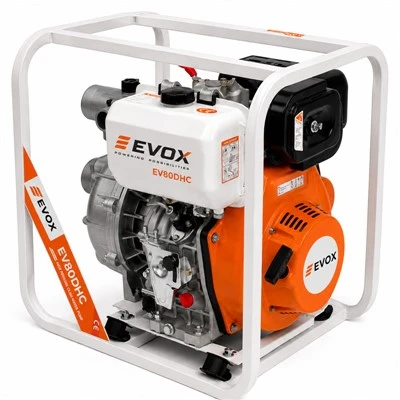
If you’re in the market for a plate compactor, whether it’s for a small backyard project or a big commercial job, we’ve got you covered. We’ve got light, medium, heavy, ride-on—all tested, all reliable, and priced right. No guesswork, no weird fine print. Just solid machines that get the job done right the first time. Hit us up to chat about your project, we can help you pick the perfect compactor for your exact needs.
Open Frame Gasoline Generator References
- Construction Trends: Compaction Equipment and Soil Properties, 2022
- ASTM Standard D698, Test Methods for Laboratory Compaction Characteristics of Soil Using Standard Effort, 2021
- Plate Compactor Safety and Operation Guide, National Equipment Dealers Association, 2023
- Landscaping Network: Choosing the Right Compaction Equipment for Residential Projects, 2022
Evoxpower Technology
Evoxpower Technology is one of the most professional plate compactor manufacturers and suppliers in China, featured by quality products and good service. Please rest assured to buy the newest plate compactor in stock here and get pricelist from our factory. Contact us for customized service and OEM service.
Address: 11 Fortune Avenue, Yubei District, Chongqing, China
E-mail: stephen@allrightpower.com
WebSite: https://www.evoxpower.com/
