Hey everyone, let’s cut to the chase—if you’ve ever wondered how those massive, weirdly shaped hollow plastic parts (think kayak hulls, playground slides, even custom medical device housings) get made without gluing multiple pieces together, it’s almost always rotational molding. But here’s the thing: if the part has a totally unique, custom structure (like internal baffles, integrated locking tabs, or undercut edges you can’t get with basic molds), it’s not just regular rotational molding—it’s rotational molding with special structure molds, and that’s where I come in. As a mold supplier who lives and breathes these custom tools, I get asked all the time how this whole process works, and why the mold itself is way more than just a block of metal. Let’s break this down, no stuffy jargon, just the real deal. Special Structure Mold
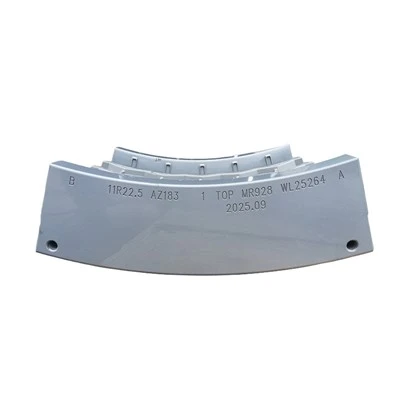
First, let’s recap basic rotational molding real quick to set the stage, because if you don’t know the foundation, the special stuff won’t make sense. Regular roto-molding (as we roto guys call it, short and sweet) uses a two-part hollow mold that you load with plastic powder, heat it up, and spin it slowly on two axes—usually the main arm spins it around a vertical axis, and a secondary arm spins it end-over-end, so the powder coats every inside surface evenly without collapsing into a solid blob. Cool, right? But here’s the catch: if your part isn’t a simple hollow ball or box, that basic mold won’t cut it. Need an internal rib to add strength to a big water tank? Or an undercut groove that lets you snap a lid on without hardware? Or a curved, organic shape that fits a custom piece of equipment? That’s where special structure molds step in, and they work because we (mold guys) engineer the tool to handle those weird, specific features that regular molds can’t.
Let’s start with the mold itself—this isn’t your grandma’s metal casting mold. Special structure molds aren’t just a single split block; they’re custom-built with specific internal components that only exist for the part you’re making. Let’s take the most common example: an undercut. Undercuts are those little slots, grooves, or bumps on a part that are wider or deeper than the rest of the part’s opening, so if you just split the mold along the seam, you’d never get the part out without breaking it. For regular parts, you either design the undercut out (which limits design freedom) or use a secondary process to machine it after molding (which adds time and cost). But with a special structure mold, we build a “lifter” or “collapsible core” into the mold. Here’s how that works: when the mold is closed, the core sits tight in the undercut area, so when the plastic powder melts, it sticks perfectly to the core. Then, once the mold cools down enough to handle, the mold operator loosens a few bolts, taps a release pin, and the core collapses inward—just enough to pull it out of the undercut groove—before the mold halves split. No breaking, no machining after, that’s the special sauce. It sounds simple, but getting the collapse timing and the core’s shape exactly right takes years of experience, not just CAD drawings.
Another big special structure mold feature is internal baffles or ribs. Big parts like portable ice chests, industrial chemical tanks, or even playground equipment need internal support to not warp or flex when they’re full. Regular rotational molding can get a little saggy in large, flat areas, so adding internal ribs makes the part way stronger without adding extra plastic (which would make it heavy and expensive). But how do you get those ribs inside the part without leaving holes? Again, the mold has custom inserts. We call them “core inserts” or “internal saddles.” These are shaped metal pieces that sit inside the mold cavity when it’s closed, so when the plastic melts and coats the inside of the mold, it also coats the outside of the insert, leaving a solid plastic rib where the insert was. The best part? Once the part is cool enough, you can just reach in and pull the insert right out—no cutting, no sanding, no leftover bits. I worked on a project a few months back for a company that makes 500-gallon water tanks for off-grid cabins; their old process involved gluing separate plastic ribs to the inside of the tank, which would crack and leak after a few freeze-thaw cycles. We built a special structure mold with a set of internal rib inserts, and now their tanks have integrated, molded-in ribs that never leak. They cut their production time by 20% and their warranty claims by 70%—that’s the real impact of these molds.
Wait, let’s talk about heat distribution, because that’s the make-or-break part for special structure molds. Regular molds are uniform metal, so heat comes in evenly, but a mold with internal inserts, lifters, or weird curved edges has hot spots and cold spots all over. If one area of the mold is even a little hotter, the plastic powder will melt too fast there and sag, or if it’s too cold, the powder won’t melt at all, leaving a rough, powdery spot. So we don’t just weld inserts into a mold and call it done—we engineer the mold’s heat channels specifically for the part’s unique structure. Sometimes that means adding small, custom-designed coolant lines inside hollow lifters, so we can cool those tricky undercut areas at the exact rate they need. Other times, we use different metal alloys for different parts of the mold: thinner, more conductive metal for areas that need to heat fast, thicker, slower metal for areas that need to hold heat longer. I can’t tell you how many times a roto operator has called me panicking because their custom part came out with a lumpy rib, and it was always because the mold’s heat channels were wrong for the special structure. It’s not just about the shape—it’s about matching every component to how the plastic flows and melts.
Let’s walk through the actual molding process with a special structure mold, so you can see it all come together. First, the roto company will get the custom mold we built for their specific part, and they load it into their roto machine. They measure out the exact amount of plastic powder (usually polyethylene, since it’s durable and cheap for this) based on the part’s volume—important, because internal inserts take up space inside the mold, so you can’t just use the same amount you’d use for a regular mold. Then they close the mold, lock all the lifters and inserts in place, and start the machine spinning. The machine heats the mold to around 350-400 degrees Fahrenheit (depending on the plastic), and spins it on two axes for 10-60 minutes, depending on how big the part is. During this time, the powder melts, sticks to the inside of the mold and the external and internal surfaces of the inserts, and evenly coats every surface—no gaps, no thick spots, because the rotation is slow enough that gravity pulls the melted plastic along with the spinning mold.
Once the cycle is done, the mold moves to the cooling station, where we pump cold water through all those custom coolant lines we built into the special structure components. This is when the magic really happens for the tricky features: the undercut lifters cool at the same rate as the rest of the mold, so the plastic in the undercut doesn’t contract unevenly and get stuck. The internal rib inserts cool, and the plastic around them hardens just enough that when we release the core, it doesn’t distort the rib or the main part. Cool down time is usually another 10-30 minutes, and then the mold halves split open. That’s when the operator does the final part of the process: they remove the inserts and lifters (they’re spring-loaded, so it’s just a quick pull and twist) and pull the finished part out. No flash, no extra material, no machining needed. I’ve seen parts come out of these molds that look like they were molded by hand, but they’re consistent enough to make 10,000 of them exactly the same—something regular molds can’t do for custom shapes.
Now, let’s get real about why special structure molds matter so much right now. A lot of manufacturers are tired of being stuck with generic parts that don’t fit their exact needs. If you’re making a custom medical device housing that has to fit a specific sensor, or a piece of agricultural equipment that needs a weirdly shaped hopper, or even a consumer product like a custom bike rack, you can’t just buy a off-the-shelf mold. Special structure molds let you design almost any shape you can imagine, without the downsides of other molding processes (like injection molding, which is way too expensive for small runs, or blow molding, which can’t make hollow parts with internal features). The only limit is your design, and our ability to engineer the mold to match that design.
But here’s the thing: not every mold supplier gets special structure molds. A lot of guys just stick to basic round or box molds, because those are easy. I’ve had so many clients come to me after wasting time and money on a supplier who tried to make a custom part with a regular mold, and it kept breaking or coming out wrong. The key is that we don’t just build a mold—we problem-solve. When a client says “I need an undercut on the bottom of this part that’s 2 feet wide,” we don’t just add a lifter; we test the design with flow simulation software to make sure the plastic will get all the way into that undercut, and we build in fail-safes so the lifter doesn’t get stuck during molding. We’ve had clients send us a 3D scan of their part, and we can adjust the mold’s special components in the CAD file before we even cut metal, so we don’t waste time on revisions.
Let me share a quick war story to drive this home. A few years back, a client who makes custom kayaks came to me because their old mold supplier couldn’t figure out how to add integrated mounting points for rod holders and pedals to the kayak’s hull. Those mounting points had small undercuts, so they kept breaking when they tried to make them with a regular split mold. We built a special structure mold with retractable core pins for each mounting point, made of a high-strength aluminum alloy that can handle the heat of the roto process. We also added custom heat lines to those pins, so they heated at the same rate as the rest of the hull. The first test part came out perfect—no broken mounting points, no gaps, exactly the shape they wanted. They ended up switching all their molds to us, and their sales went up 40% because their kayaks now have those integrated features that competitors’ kayaks don’t. That’s the kind of result you get when you take the time to build a special structure mold right, not just cut corners.
So, if you’re a manufacturer, product designer, or engineer who’s stuck with a part that’s too custom for regular rotational molding, or you’re tired of the extra cost and time of secondary processes like machining or gluing, special structure molds are the way to go. The process is science, sure, but it’s also about knowing how to adapt that science to your specific part—something not every mold supplier can do.
If you’re ready to stop dealing with generic parts or wasted production time, reach out to chat about your project. We can walk through your design, figure out what kind of special structure mold you need, and give you a clear, fair quote. No confusing jargon, no hidden fees, just real mold solutions for your real parts.
Special Structure Mold References
- Rosato, D. V., & Rosato, M. G. (2000). Rotational Molding Handbook. Hanser Gardner Publications.
- Crawford, R. J. (1998). Rotational Molding: Technology, Materials, and Applications. Woodhead Publishing.
- "Custom Rotational Molds: Design Principles for Complex Features." Journal of Injection Molding Technology, vol. 12, no. 3, 2008, pp. 145–152.
Anhui Varon Mould Co., Ltd.
We are one of the most professional special structure mold manufacturers and suppliers in China, also support customized service. We warmly welcome you to wholesale premium special structure mold made in China here from our factory. If you have any enquiry about cooperation, please feel free to email us.
Address: Anhui Province, Ningguo City, Economic and Technological Development Zone, Heli Industrial Park, Dongcheng Avenue
E-mail: admin@varonmould.com.cn
WebSite: https://www.wanlongmold.com/
