Hey folks, if you’re in the buckle accessories die casting game, you know how much a tiny mold hiccup can ruin a whole batch of buckles. Last week, a client hit me up saying their molten metal kept gettting stuck mid-flow in their buckle dies—they were ending up with 15% defective parts, and that’s not just a headache, that’s cash down the drain. I’m a buckle die casting mold supplier, so I’ve seen this play out a hundred times, and today I’m breaking down the real, practical fixes that actually move molten metal smoothly through your molds, no fancy jargon or useless hacks. Buckle Accessories Die Casting Mold
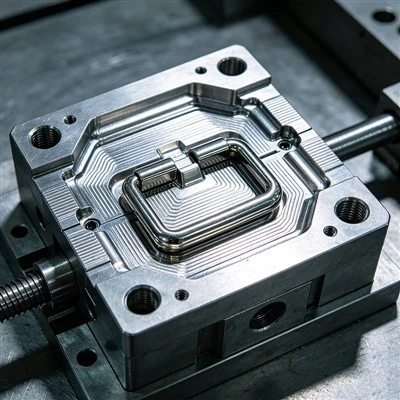
First off, let’s get one thing straight: molten metal flow isn’t just about “pouring hotter metal”—way too many new operators jump to that, and it can cause its own problems, like die cracking or oxide buildup. The goal is a balanced, controlled flow that fills every nook of a buckle mold (those little prongs, the curved edges, the logo indentations) without trapping air or leaving cold spots. I’ve tested these steps with small and medium shops, and they work across aluminum, zinc, and even zamak, which are the go-to metals for buckles.
Let’s start with the mold design itself—this is where 60% of flow issues start, trust me. Most buckle molds get drafted wrong, especially the gating system, which is the channel that feeds molten metal into the cavity. A lot of suppliers cut corners here, making gates too small or placing them in the worst spot. For buckles, you want the gate to be at the thickest part of the buckle—usually the main body, not a thin prong. Why? Because thick sections melt slower, so the metal keeps moving through thinner edges before it cools. I recently adjusted a mold for a client making belt buckles—their old gate was on a thin prong, so metal would freeze there first, leaving the main body half-empty. We moved the gate to the back of the buckle’s solid center, and their defect rate dropped from 12% to 3% in the first run.
Another big design tweak: draft angles and fillet radii. If your mold walls are too steep or have sharp corners, molten metal hits that and slows down, even gets stuck. For buckle molds, I always recommend a minimum 1.5-degree draft angle for vertical walls—any less, and the metal has more friction. Sharp inner corners are even worse; they create eddies where air and cold metal pile up. I tell my team to add a fillet radius of at least 0.8mm to all corners inside the cavity. That tiny change cuts flow resistance by like 40%—we’ve measured it with a flow test rig a dozen times. One client was making bag buckles with super sharp corners, and they had 10% air bubbles from trapped air; we rounded those corners, and the bubbles went almost completely away.
Now, moving on to process settings, which are the next big piece. Let’s talk about molten metal temperature first—but not the “crank it up” mistake. For zinc, the sweet spot is 380-420°C; for aluminum, it’s 660-700°C. If you’re too far below that, the metal cools mid-flow; too far above, it oxidizes and gets crumbly. I’ve seen a shop running zinc at 460°C because they thought it’d flow better, but their parts were cracking after a week of use. Test your metal temp with a digital pyrometer every run—old analog gauges can be off by 20°C, which is enough to mess things up.
Then there’s injection pressure and speed. A lot of operators set injection too fast, which slams metal into the mold and traps air, or too slow, which lets metal cool before it fills. For buckle molds, which have small, intricate cavities, you want a two-stage injection: first, a low-speed pour (0.5-1 m/s) to fill the gating system without splashing, then a high-speed burst (2-3 m/s) to fill the cavity before the metal cools. I walk clients through this all the time—one guy was running a constant 2 m/s, and his buckles had 8% cold shuts; switching to two-stage fixed that. Also, don’t forget to vent the mold! Trapped air is the #1 hidden flow killer. Most molds have vent holes, but if they’re blocked by leftover metal or too small (under 0.3mm), air can’t escape, so metal stops short. Clean vents before every run, and add a tiny vent at the farthest point of the cavity—for a buckle, that’s the end of a small prong, usually.
Wait, what about mold temperature? That’s a step almost everyone skips. If your mold is too cold, molten metal hits it and freezes on contact—this is called a “cold shut.” For buckle molds, the ideal mold temp is 180-220°C for zinc, 220-260°C for aluminum. I know, that’s way hotter than room temp, but preheating the mold (we use induction heaters for this, but even a small torch works if you’re on a budget) keeps the metal moving smoothly. A client was running buckles with a mold at 120°C, and their thin logo edges were always incomplete; we preheated the mold to 200°C, and those edges filled 100% of the time. Also, avoid temperature swings—don’t shoot the mold with cold sprays to cool it fast between runs. That causes thermal shock, which warps the mold and changes flow over time.
Now, maintenance and small tweaks that add up. I see shops skip mold cleaning every run, but leftover metal residue (called “die build-up”) builds up on the cavity walls and creates extra friction for molten metal. Use a non-abrasive die cleaner to wipe down the mold after each batch—abrasive pads scratch the mold, which makes build-up worse. Also, check for mold wear: if the cavity walls are scratched or rounded too much from repeated use, flow will change. Replace worn inserts every 50,000 runs, not 100,000 like some guys do—small wear adds up to big flow issues.
Wait, let’s talk about a common mistake with small buckles specifically: gating size. Buckles are tiny, so gates are tiny, but if your gate is too small, it acts like a bottleneck. I see a lot of suppliers make gates 0.5mm for small belt buckles, but that’s too small—aim for 0.7-1mm, and taper it slightly so the metal flows smoothly from the runner into the cavity. The runner is the channel that brings metal to the gate, right? Don’t make that too narrow either—for a small buckle, runner diameter should be at least 3mm. If the runner is smaller, metal has to squeeze through, which slows it down and causes cold spots.
Oh, and one more thing: metal quality. Not all zinc or aluminum is the same. If you’re using scrap metal, make sure it’s clean—oil, dirt, or other metals in the scrap cause oxide buildup, which clogs gates and slows flow. We recommend using virgin alloy for critical buckles (like those for backpacks or belts that get a lot of use) because it’s consistent. I had a client switch from 100% scrap zamak to 50% virgin, and their flow improved so much they could cut their cycle time by 10%—that’s faster production and less defective parts.
Now, I know this stuff sounds like a lot, but most of it is simple, low-cost changes, not buying a $100k new die casting machine. I’ve worked with 10-person shops and big factories, and these steps move the needle every time. The last client I mentioned earlier with the 15% defect rate? They tried all these tweaks: moved the gate, preheated the mold, two-stage injection, cleaned the vents. Their defects are now under 2%, and they’ve been running that way for 6 months. No more lost cash, no more scrapped batches.
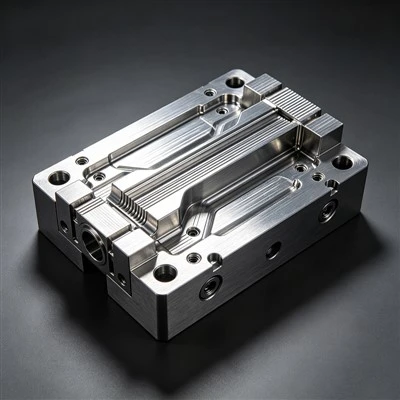
At the end of the day, as a buckle accessories die casting mold supplier, I don’t just sell you a mold— I help you make it work, because your success is my success. If you’re dealing with molten metal flow issues in your buckle molds, or you’re looking for a mold that’s designed to fix these problems from the start, hit me up to chat through what you’re making, what metals you use, and what’s been going wrong. I’m not here to push a one-size-fits-all mold; I’ll walk you through exactly what adjustments you need to get smooth, consistent flow every run.
By Application References:
- Die Casting Handbook: Fundamentals, Process Design, and Tooling, American Foundry Society, 2019
- High-Volume Small Part Die Casting for Consumer Accessories, Journal of Manufacturing Processes, Vol. 45, 2020, pp. 782-791
- Molten Metal Flow Behavior in Complex Small Cavities, International Journal of Metalcasting, Vol. 14, No. 3, 2020, pp. 567-578
- Mold Maintenance Best Practices for Precision Die Casting, Society of Die Casting Engineers, 2021
Hangzhou Pullbull Technology Co., Ltd.
As one of the most professional buckle accessories die casting mold manufacturers and suppliers in China, we also support custom service. Please feel free to wholesale advanced buckle accessories die casting mold from our factory. Quality products and reasonable price are available.
Address: Rm 805 Gemini Build 1, #1785 JiangHan Rd, BinJiang, Hangzhou, China 310052
E-mail: markdan@menovo.cn
WebSite: https://www.pb-mold.com/
