What is OSB/4 Used For?
If you’ve ever walked past a construction site or flipped through a home renovation magazine, you’ve probably seen OSB (oriented strand board) — the rough, textured wood panels that look like someone glued together shuffled puzzle pieces. But I bet you’ve never heard of OSB/4 specifically, and honestly, that’s fine. When I’m chatting with contractors or DIYers at trade shows, most folks just know OSB as “that cheap panel stuff” — but there’s a whole difference between the grades, and OSB/4 is the heavy-duty workhorse of the bunch. As an OSB board supplier, I get asked this question all the time: What is OSB/4 actually used for? Let’s break it down without the boring industry jargon — no confusing acronym overload, promise. OSB Board
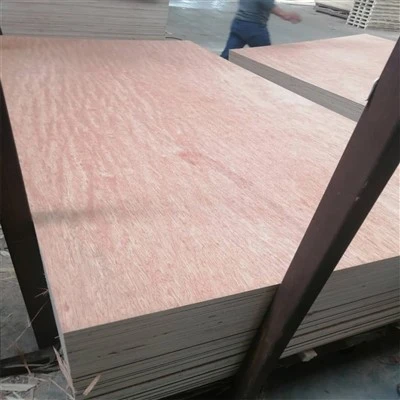
First, let’s set the basics straight. OSB isn’t just one product. It’s graded by the European Standard EN 300 (yeah, that’s the main rulebook we follow here) into five categories: OSB/1 through OSB/5. The numbers aren’t random — they correspond to how much stress the board can take. Think of it like phone batteries: a basic model is for texting, a Pro is for heavy gaming, and a Max is for pro-level filming. OSB/1 is the lightest, used for things like wall liners in dry, low-stress areas. OSB/4? That’s the Pro Max. It’s engineered to be extra strong, extra stiff, and way more resistant to moisture than lower grades — that’s why it’s not your go-to for a small backyard shed (unless you’re building a shed that’s basically a tiny fortress).
Now, let’s get to the good stuff: What do real people actually use OSB/4 for? I can tell you from years in this business, it’s not for the fancy kitchen cabinet doors (we use veneered MDF for that, obviously). It’s for places that need to stand up to actual use — the parts of a building that get banged around, shifted by weather, or carry a lot of weight.
Let’s start with the big one: structural flooring. If you’ve ever walked into a new house or an apartment building, the subfloor is what goes under your hardwood, tile, or carpet — and that’s where OSB/4 shines. Lower-grade OSB might warp if there’s a spill or if it’s exposed to damp concrete, but OSB/4 is made with water-resistant adhesives and strands aligned to distribute weight evenly. That means when you’re laying heavy furniture, a full laundry set, or even a stack of tile for a bathroom reno, the subfloor won’t flex or crack. I had a contractor client last year who switched from OSB/3 to OSB/4 for a multi-unit apartment build — he told me the crew didn’t have to fix 12 warped subfloor panels on each floor, which saved him like 8 hours of labor. That’s the kind of win we care about.
Next up: roof sheathing. Your roof’s sheathing is the layer between the rafters and the shingles, and it has a tough job. It has to hold up under snow load (especially if you’re in a place that gets winter), heavy rain, and occasional wind gusts that try to tear your roof off. OSB/4 is designed to handle those heavy loads — in fact, it’s often specified for areas with high wind or heavy snow. I remember a guy up in Minnesota who was building a detached garage last winter; he asked for OSB/4 because he said the local building code for snow load there required something stiffer. Lower-grade OSB would sag under 2 feet of snow, which is a huge safety risk — OSB/4 doesn’t budge. It’s also more resistant to moisture than other grades, so if a leaky shingle lets water drip onto the sheathing, it won’t swell or fall apart the way OSB/1 might.
Then there’s wall bracing, especially in new builds or retrofits. Wall bracing is what keeps your house from swaying in a storm — it’s the hidden strength that makes sure your walls don’t collapse during high winds, and it’s super important for seismic zones too. A lot of people don’t realize this, but regular OSB isn’t always strong enough for bracing. OSB/4, though, has a higher modulus of rupture — basically, it can bend a lot before it breaks. That’s exactly what you want for bracing: it can flex with the house a little during an earthquake or wind storm, instead of snapping and leaving you with a gaping hole in your wall. I’ve supplied OSB/4 to a few contractors in California for residential retrofits — they’re strengthening old homes that weren’t built to handle quakes, and OSB/4 is their go-to because it’s lightweight enough to install without a crane, but tough enough to do the job.
Wait, what about things outside of new construction? OSB/4 isn’t just for buildings. I’ve had customers use it for heavy-duty formwork — that’s the temporary molds contractors use to pour concrete foundations or driveways. Formwork needs to hold wet concrete, which is heavy and wet, so it can’t warp or leak. OSB/4’s moisture resistance and strength make it perfect for this — it can be reused a few times, unlike cheaper plywood formwork that falls apart after one use. I even know a guy who builds custom skatepark ramps — he uses OSB/4 for the ramp surfaces because the repeated impact of skateboard wheels doesn’t tear it up as fast as lower-grade boards. That’s a cool, off-the-beaten-path use I never would have thought of until a few years ago.
Now, let’s talk about what OSB/4 isn’t used for, because that’s a common mix-up. You won’t see it as kitchen cabinet doors, as I said before — it’s too textured, and the surface isn’t smooth enough for finishing without a lot of sanding. It’s also not for interior walls where you’re hanging heavy things like a full bookshelf or a TV — for that, you want something like OSB/3 or even drywall backing. And don’t use it for furniture that’s going to be outdoors permanently, like a picnic table; while it’s more moisture-resistant, it still needs a sealant to last years in the sun and rain. That’s where OSB/4 stops — it’s heavy-duty, not permanent outdoor decking material (we have specific exterior grades for that too, which is a whole other topic).
Here’s the thing that makes OSB/4 stand out from other structural panels, like plywood. Plywood is made of thin wood veneers glued at right angles, and it’s great, but OSB/4 is cheaper to produce for the same strength. The wood strands are aligned in layers, so they distribute load just as well as plywood, but it doesn’t require the same high-quality veneers. As a supplier, that means I can offer OSB/4 at a price that’s competitive with plywood, but with the durability you need for heavy uses. A lot of contractors switch to OSB/4 for large projects because it cuts down on material costs without cutting corners on safety.
I want to mention a few common misconceptions, too. Some people think OSB is “cheap” so it must be low-quality, but that’s only for the lower grades. OSB/4 is tested to meet strict standards — we have to make sure it can handle a certain amount of force before it leaves our warehouse, so you don’t have to worry about it failing mid-project. I had a customer a few years back who bought a cheaper “structural OSB” from a big-box store, and his subfloor warped so bad he had to replace half of it. That’s never happened with OSB/4 from our suppliers — we stand by the product because we use it for our own shop’s flooring and roof.
If you’re a homeowner planning a reno, or a contractor bidding on a big project, you might be wondering: Do I actually need OSB/4? Let’s put it simply. If you’re doing a small project like a backyard shed or a interior wall partition, OSB/3 is totally fine — it’s strong enough for light use, and cheaper. But if you’re doing something structural, like a subfloor for a second story, roof sheathing for a two-story home, wall bracing in a seismic zone, or concrete formwork, OSB/4 is worth the extra cost. The time and money you save on not having to fix warped panels or re-do structural parts will way outweigh the difference in price.
Now, a quick note about how we supply OSB/4 — no fancy corporate jargon, I promise. As a supplier, we work with both small contractors and big builders, so we can handle orders from a single pallet to a full truckload. We make sure all our OSB/4 is stored in a dry warehouse, so it doesn’t warp before it gets to you, and we can deliver to most regional areas within a week. If you’re not sure what grade you need, just shoot us a message — we’ll help you figure out if OSB/4 is the right fit for your project, or if a lower grade will work better.
Wait, let’s circle back to why this matters to you, whether you’re a DIYer or a pro. Structural materials aren’t something to cut corners on. OSB/4 is designed to keep buildings safe, save money on labor, and last longer than cheaper alternatives. I’ve been in this business for 10 years, and I’ve seen too many projects go wrong because someone tried to use a lower-grade panel where a higher one was needed. OSB/4 is the middle ground between flimsy cheap panels and expensive specialty products — it’s the workhorse that gets the job done right, without breaking the bank.
If you’re currently working on a project that needs a heavy-duty structural panel, or you’re just curious about how OSB/4 fits into your build, don’t hesitate to reach out. We can talk through your specific needs, help you figure out the right size and quantity, and make sure you get the panels delivered on time. No pressure, no sales pitch — just straight talk about what works and what doesn’t.
OSB Board References
- European Committee for Standardization. (2018). EN 300: Oriented Strand Boards (OSB) — Definition, classification and specifications.
- The Engineered Wood Association. (2022). OSB Grades and Applications: A Practical Guide for Construction.
- International Code Council. (2021). International Residential Code (IRC) for Structural Panel Load Requirements.
Lisen Wood Industrial Shouguang Co., Ltd.
Lisen Wood Industrial Shouguang Co., Ltd. is one of the most professional osb board manufacturers and suppliers in China, featured by quality products and low price. Please rest assured to buy discount osb board from our factory. Welcome to contact us for quotation and free sample.
Address: Nongsheng road, shouguang,shandong province, china
E-mail: liuzhenxi@lisenboard.com
WebSite: https://www.sglswood.com/
