Hey there, if you’ve ever stood next to a drying or cooling machine at a food processing plant, a packaging facility, or even a lumber mill, you might’ve noticed that low, constant hum of the fan pushing air. That’s not random noise—it’s the air flow rate, the unsung hero that makes these machines actually work. As someone who’s been supplying drying and cooling gear for over 12 years, I get it: a lot of people new to the industry glaze over when I talk CFM, static pressure, and all that. But get this—get the air flow rate wrong, and you’re looking at half-dry product, spoiled goods, sky-high energy bills, or even machines that break down way sooner than they should. Let’s break this down like we’re chatting over a coffee, no stuffy jargon that makes your brain hurt. Drying and Cooling Machines

First off, let’s define air flow rate in plain terms. It’s just the volume of air a machine moves per minute, right? Usually measured in CFM—cubic feet per minute. But CFM alone doesn’t tell the whole story, which is where static pressure comes in. Static pressure is like the resistance the air has to push through—think of it like blowing up a balloon: the more resistance (the fuller the balloon), the harder you have to blow, even if the volume of your breath stays the same. For drying and cooling machines, that resistance comes from things like the product on the conveyor, the ductwork leading in and out, or even filters. So if someone says “my drying machine needs 1,000 CFM,” you can’t just grab a fan that moves 1,000 CFM in an open room. That fan won’t have enough oomph to push all that air through the product load. I see this mistake all the time—customers cut corners on the fan size because they only look at CFM numbers, then end up re-running product or wasting energy running the fan at max speed to compensate. It’s a double loss, y’know?
Now, how do you figure out what your air flow rate actually needs to be? It’s not a one-size-fits-all number, that’s for sure. Let’s break it down by the two main jobs these machines do: drying and cooling, because their needs are totally different.
For drying machines, whether it’s drying fresh cut veggies, roasted coffee beans, or paint on pre-fab parts, the air flow rate is all about how much moisture you need to pull out, and how fast. Let’s take a super common example: drying leafy greens. You’ve got a conveyor with spinach coming off a washer, dripping wet. To dry that, you need enough air to blow over every single leaf to pull moisture away—if the air is moving too slow, the moisture just sits on the surface, so you get soggy spinach that goes bad in a day instead of a week. For produce like that, we usually recommend 500 to 1,200 CFM per square foot of conveyor bed, depending on how wet the product is and what final moisture content you’re targeting. Denser products, like roasted sunflower seeds, need higher CFM—around 1,500 to 2,000 per square foot—because the moisture is trapped inside the seeds, so you need more air to circulate through the pile, not just over the top.
Wait, here’s a pro tip from my team: if your product is coming into the dryer really wet, you don’t just crank up the CFM. Sometimes you need to adjust the temperature too, but air flow is key here. We had a customer last year who was drying blueberries and using a 2,000 CFM dryer, but his berries were still coming out 2% too moist. Turns out his conveyor was only half the width of the dryer, so air was just blowing through empty space instead of the berries. He bumped the CFM to 2,500 but rearranged his product to cover the whole bed—boom, perfect moisture, no wasted energy. That’s the kind of fine-tuning most generic guides don’t tell you.
Now for cooling machines—this is where people mix it up so bad. Cooling is about taking a product that’s hot (like cookies fresh out of the oven, or plastic pellets right after molding) and dropping its temp fast enough to prevent spoilage or sticking. Here, air flow rate isn’t just about moving air—it’s about how quickly you can replace the hot air around the product. For cookies, for example, you want to get their temp from 180°F down to under 90°F before packaging, right? If air is moving too slow, the hot air stays trapped in the cooling zone, so your cookies stick together on the conveyor or develop mold in the package. For baked goods, we usually recommend 300 to 800 CFM per square foot of conveyor, way lower than drying. Wait, why the difference? Because cooling doesn’t need to pull moisture—just heat. So you don’t need as much air volume, but the air should be as cold as possible, and moving consistently. If you use a dryer’s 1,500 CFM fan for cooling, you’re blowing way too much cold air, which might dry out your cookies too much, or create drafts that make the product uneven. I once had a bakery client who swapped a cooling fan for a dryer fan, and they ended up with 10% more broken cookies—turns out the extra air flow was blowing the cookies off the conveyor mid-cooling. Oops.
Okay, so what factors actually change that number? Let’s list the big ones, because every customer’s setup is different. First, product type. Leafy, porous stuff (produce, tobacco) needs higher CFM than dense, solid items (metal parts, nuts). Then, machine size—obviously, a 10-foot conveyor will need more CFM than a 5-foot one. Conveyor speed matters too: if you’re moving product faster through the machine, you need higher air flow to handle more volume at once. Moisture content for drying: if your product has 80% moisture coming in vs. 40%, you’ll need 20-30% more CFM. Even the ambient temp of your facility plays a role—if you’re in a hot, humid area, your drying machine has to work harder, so you need a little extra CFM to overcome that extra moisture in the air.
Wait, let’s talk about energy, because that’s a huge pain point for every facility. Most customers don’t realize that air flow rate is tied directly to their electric bill. If you have a fan that’s too big, you’re wasting energy pushing extra air that doesn’t do anything. If it’s too small, you’re running the fan at max speed all the time, which also uses more power and wears out the fan faster. We had a customer in lumber production a couple years back—they were using a drying machine with a 10,000 CFM fan, but we calculated they only needed 7,500. Swapping the fan cut their energy use by 22% a year, which saved them over $1,800. That’s not chump change, right? For a small business, that’s a new truck or a whole lot of raw material.
Another thing I see way too often: people ignoring air flow uniformity. Like, even if you get the total CFM right, if the air is blowing uneven—some spots with 1,000 CFM, some with 300—your product will come out inconsistent. Half the conveyor is dry enough, half is still too moist, or some cookies are cooled, some are still warm. That’s why we design our machines with adjustable air vents, so you can tweak the flow in different zones. For example, if you’re drying slices of carrot, the end of the conveyor might have drier product and the middle is still damp, so you can crank up the CFM in the middle zone to make up for it. It’s little tweaks like that that make the difference between a machine that’s “good enough” and one that saves you money and product.
Wait, let’s clear up a common myth: higher CFM isn’t always better. I can’t stress that enough. I had a customer last year who insisted on a 20% higher CFM than we recommended for his coffee bean dryer. He thought more air would mean faster drying. What happened? His beans dried too fast on the surface, trapping moisture inside. So when he roasted them, they cracked or had that bitter, under-roasted taste. He ended up throwing out 150 pounds of beans before he called us, and had to adjust the air flow down. Lesson learned: more isn’t better, it’s just right.
Now, how do we actually measure air flow rate for your machine? It’s not just looking at the fan’s label, either. Factory labels often list CFM at zero static pressure, which is the open-air number, not the number your machine actually uses. To get the real CFM, you need a device called an anemometer, which measures air speed, then you multiply that by the area of the duct to get volume. That’s what our service techs do when we install a machine—we test the air flow across the whole conveyor, adjust the fan speed or vents to get it exactly where it needs to be. We don’t just unbox the machine, turn it on, and walk away. That’s how you get those even results.
So, if you’re out there shopping for a new drying or cooling machine, what should you ask about air flow rate? First, don’t just ask “what’s the CFM?” Ask about how that CFM is distributed—does the machine have adjustable zones? Can it handle different product densities? And make sure the supplier tells you the CFM at your specific load, not some generic number from a spec sheet. That’s the difference between a machine that works for you and one that’s a headache.
At the end of the day, air flow rate is the backbone of these machines. Get it right, and you’ll get consistent product, lower energy costs, less waste, and a machine that lasts longer. Get it wrong, and you’re dealing with spoiled product, broken parts, and wasted time. We’ve been supplying these machines for years, and every time we work with a customer to get their air flow rate dialed in, that’s the feedback they give us: “I didn’t know that small a tweak would make that big of a difference.”
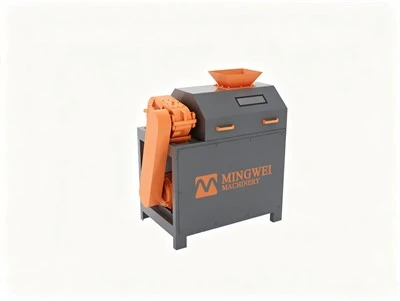
If you’re in the market for a new drying or cooling machine, or you’re frustrated with your current one not performing like it should, we’re here to help. We can walk you through figuring out exactly what air flow rate you need based on your product, conveyor size, and goals, no jargon, no pressure. Just send over your details, and we’ll chat about what works for you.
Fermentation Compost Equipment REFERENCES
- American Society of Agricultural and Biological Engineers. (2020). Agricultural Drying and Cooling Equipment Standards. ASABE S416.1.
- Food and Drug Administration. (2019). Design Considerations for Food Processing Drying and Cooling Systems. FDA Guidance for Industry.
- Air Movement and Control Association International. (2021). Fan Selection and Application Handbook for Industrial Drying Processes. AMCA 99.
- Industrial Energy Efficiency Center. (2022). Optimizing Air Flow in Industrial Process Cooling Systems. IEE Resource Document.
- National Association of Food Processors. (2021). Best Practices for Drying and Cooling High-Moisture Food Products. NAFP Technical Bulletin.
Henan Mingwei Machinery Equipment Co., Ltd.
As one of the most experienced drying and cooling machines manufacturers in China, we have world-leading production equipment and strong manufacturing capabilities. Please rest assured to buy durable drying and cooling machines for sale here from our factory. For price consultation, contact us.
Address: No.461 Qudong Jinsui Avenue, Hongqi District, Xinxiang City, Henan Province, China
E-mail: info@hnmwm.com
WebSite: https://www.hnmwmequip.com/
