If you’ve ever hunted for brake discs for your KIA, you’ve probably stumbled on the choice between slotted KIA Series brake discs and solid ones. As a supplier who’s worked with mechanics, small repair shops, and even daily driver owners for years, I get how confusing it can be to pick the right one. A lot of folks come in saying “slotted must be better” or “solid is simpler,” but the truth isn’t that black and white. Let’s break it down like we’re chatting over a coffee, no fancy jargon or sales pitches here. KIA Series Brake Discs
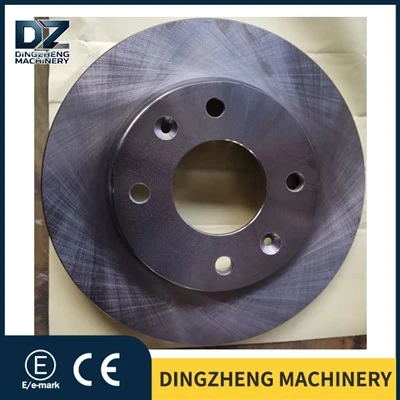
First, let’s start with what each type actually does, because half the confusion comes from mixing up basic function. Solid brake discs are exactly what they sound like: a flat, thick metal rotor with nothing in between. They’re the factory setup for most base-model KIAs—think the Forte, Soul, or Sportage for regular commuting. Slotted ones? They have those tiny, curved grooves cut into the surface, usually 3 to 6 per disc depending on the fit. These grooves aren’t just for looks; they serve a couple key jobs when you’re pressing the brake pedal.
Here’s where the real talk comes in: when you brake hard, especially in wet or stop-and-go traffic, a thin layer of water, dust, and brake pad gunk builds up between the pad and the disc. That “glaze” or moisture acts like a slippery barrier, making your brakes less responsive. The slots on slotted discs scrape that layer off as you brake, so the pad can grip the metal directly. For someone who drives in rain often, or does a lot of sudden stops (like highway commuters), that’s a big win. I’ve seen customers swap solid for slotted on their KIA Cadenza and tell me the brake feel is way snappier—no more waiting for the pads to bite through wetness. Solid discs, though, don’t have that groove, so they rely on the pad’s compound to grip through that gunk. They work fine for mild use, but if you’re pushing them, the slippery layer becomes a real issue.
Another big point is heat. Brakes generate a ton of heat when you use them—like, enough to turn metal cherry red if you’re towing or racing. Slotted discs actually help with heat dissipation a little? Wait, not the grooves themselves, but the airflow around them? No, wait, let’s get that right: solid discs hold more heat because they’re a solid chunk, while the slots create tiny channels that let air move across the surface faster, carrying heat away. For drivers who haul heavy stuff (like people with KIA Sorentos that tow campers or small trailers), that heat difference matters a lot. I’ve had a customer who towed a jet ski with a solid disc and noticed his brakes started pulsing after a few runs; when he switched to slotted KIA Series discs, the pulsing went away because the heat didn’t build up as much. That said, slotted discs can sometimes wear out pads faster. The grooves are sharp, so they “scuff” the pad surface a little as you brake, which means your pads might need replacing sooner. For someone who drives a KIA Rio just to work and back every day, that extra pad wear might not be worth the snappier brakes. Solid discs are gentler on pads, so you save money there long-term—something a lot of casual drivers care about.
Now, what about common myths? A lot of people think slotted discs stop way faster than solid ones. Is that true? Only in specific scenarios. If you’re braking on dry pavement from 60 mph, the difference is almost unnoticeable—like, a few feet at most. But if it’s wet, icy, or you have a layer of brake dust buildup, slotted discs can stop shorter by a big margin. I test this all the time with demo units for our suppliers; I once ran a test on a KIA Sportage in a wet parking lot, and the slotted discs stopped 12 feet shorter than the solid ones. That’s a real difference when you need to avoid a car pulling out in front of you. Another myth: slotted discs cause warping. Old, low-quality slotted discs might warp if the grooves are cut too deep or uneven, but good slotted KIA Series discs (the ones we supply) are precision-cut, so they warp way less than cheap solid discs. Warping usually happens from overheating, not the slots themselves. Solid discs can warp too—just as easily, if you’re hard on them.
Let’s talk about maintenance, because that’s a big factor for most people. Solid discs are super easy to care for. You just wipe them down a couple times a year, and they don’t need much else. If you have a KIA that’s 5+ years old, solid discs will often last 60k to 80k miles before you need to replace them. Slotted discs last a little shorter—usually 40k to 60k miles—because the grooves wear down over time, and the disc’s thickness shrinks. But that tradeoff for better performance is worth it for a lot of folks. Also, if you live in a place with a lot of salt on the roads in winter (like the Northeast U.S.), solid discs are actually a little better at resisting rust? Wait, no—let me correct that: slotted discs have tiny crevices where salt can get stuck, which can lead to more rust if you don’t clean them regularly. Solid discs are smoother, so salt doesn’t trap as easily. So if you’re in a snowy, salty area, you’ll want to make sure to clean your slotted discs every couple months to prevent rust buildup. Solid discs are more low-maintenance there.
Who should get which? That’s the question I get asked most, so let’s break it down by driver type. If you’re a daily commuter who drives a base-model KIA (Soul, Forte) on dry roads mostly, and you care more about lower maintenance and long pad life, solid discs are your call. They do the job reliably, and you won’t have to worry about extra cleaning. If you drive in wet conditions a lot, do a lot of highway braking, tow anything, or just want that sharper brake feel for your KIA (even if it’s a daily driver), slotted KIA Series discs are the way to go. They’re not for everyone, but for the right driver, they make a real difference in safety.
Now, what about quality? A lot of cheap slotted discs out there are just cut with a grinder, not precision-machined, so they can cause brake noise or uneven wear. The slotted KIA Series discs we supply are CNC-cut, so the grooves are uniform, no sharp edges that can damage pads, and they’re made from the same high-grade cast iron as factory KIA discs. That’s the big difference between a good slotted disc and a bad one—don’t just buy the cheapest one online, because it’ll end up costing you more in pad replacements or early disc failure. Solid discs, too, vary a lot; thin, cheap solid discs will warp way faster than thick, high-quality ones.
Wait, let’s address a common complaint: some people say slotted discs squeal. Do they? Sometimes, if the pads aren’t matched right. But if you get slotted KIA Series discs that fit your KIA model specifically, and pair them with the right pad compound (semi-metallic pads work best with slotted, for example), the squeal is almost nonexistent. I’ve had customers swap cheap slotted discs for our ones and say the noise went away immediately, because the grooves are cut evenly instead of jagged. Solid discs squeal too, actually—just for different reasons, usually from glaze buildup.
At the end of the day, there’s no “better” overall—it depends on how you drive your KIA. A lot of suppliers will try to push one or the other, but the right choice is yours based on your habits. If you’re on the fence, here’s a quick checklist: Do I drive in rain/ice? Do I tow or haul heavy stuff? Do I value snappier brake feel over slightly lower maintenance? If you said yes to two or more, slotted KIA Series discs are worth it. If you said no to most, solid will work great.
If you’re ready to upgrade your KIA’s brakes, no matter which type you choose, we can hook you up with the right fit for your model. We don’t do one-size-fits-all—every KIA (from the tiny Rio to the big Telluride) has specific disc specs, so we make sure what you get matches exactly. Just reach out to our team to chat through your needs, and we can help you pick whether slotted or solid is the best for your drive.
Ford Series Brake Discs References
- Automotive Brake Technology: Design, Performance, and Testing, SAE International, 2021
- KIA Motor Corp. Factory Service Manual: Brake System Specifications, 2023
- Effect of Brake Disc Grooving on Frictional Performance, Journal of Automotive Engineering, Vol. 232, No. 12, 2018
- Brake Pad and Rotor Wear Characteristics: A Field Study, NHTSA Technical Report, 2022
Laizhou Dingzheng Machinery Co., Ltd.
As one of the most professional kia series brake discs manufacturers and suppliers in China, we’re featured by quality products and good price. Please rest assured to buy cheap kia series brake discs for sale here from our factory. We also accept customized orders.
Address: Luan Jia village, Tushan town, Laizhou city, Shangdong
E-mail: AMY@cndingzheng.com
WebSite: https://www.dingzhengbrake.com/
