If you’ve walked the floor of a heavy fabrication shop in the last 10 years, you’ve probably noticed fewer welders hunched over workbenches, holding torches steady through thick steel plates, and more heavy-duty welding robots gliding through consistent, steady arcs. When I meet with shop owners, the first question they ask isn’t about the flashy new features on these robots—it’s about one metric, above all others: “How much are these really going to cut my labor costs?” I get it. For a small to mid-sized fabrication shop, labor is usually the single biggest line item on the P&L, and hiring, training, and retaining skilled welders has only gotten more expensive over the last decade. As a heavy-duty welding robot supplier, I don’t sell machines as a shiny new toy; I sell a solution that cuts waste, reduces rework, and unlocks labor that used to be tied up in repetitive, high-risk work to be used where it actually adds value. Heavy-Duty Welding Robots

Let’s start with the biggest, most immediate labor cost saver: the elimination of rework. Let’s be honest, even the most experienced manual welders are human. A 12-inch weld on half-inch steel might look perfect to the naked eye, but a welder who’s worked 10 straight hours might miss a tiny porosity spot, or vary their travel speed just enough to create a weak joint. For heavy-duty applications—think construction equipment frames, agricultural implements, or structural steel beams—that small error isn’t just a minor fix. It means cutting out a section of weld, grinding the joint down, re-welding it, and that’s 15, 20, even 30 minutes of wasted labor that you can’t bill for because the original part has to be reworked. I’ve worked with a 12-person farm equipment shop in Iowa that was averaging 18% rework on their large frame welds before they brought in two of our heavy-duty Fanuc ARC Mate 120iDs, built specifically for loads up to 15 kg and workpieces up to 2 meters in diameter. Six months after installation, their rework dropped to less than 3%. That’s not a guess; that’s their payroll data, pulled straight from their time-tracking system. The welder who was assigned to rework 20 hours a week now works on new, custom build projects that actually generate profit, while the robot handles the 8 identical welds on every frame. That’s labor cost saved, not spent on fixing mistakes.
Then there’s overtime and premium pay. For heavy-duty welding, most shops run two shifts, and sometimes a third, because rush orders have to get out. But paying time-and-a-half for welders to work 10-hour days, or double time for weekend shifts, adds up fast. A 2022 report from the American Welding Society found that the average hourly rate for a skilled industrial welder, including overtime, is $32 an hour, and during peak season, that can jump to $45 an hour or more. Our heavy-duty welding robots don’t get tired. They don’t call in sick on a Friday when you need a rush order, they don’t complain about working through lunch, and they work 16-hour shifts with zero reduction in quality. We had a structural steel shop in Ohio that was paying $12,000 a week in overtime just to fulfill a 100-beam order for a new warehouse. They ran one robot on the order over a weekend, and cut that overtime cost by 75%. The weld that used to take 8 welders 3 days to complete was done by the robot in 16 hours, with no overtime, no lost productivity, and the beams passed inspection on the first try. The biggest win here isn’t just avoiding overtime, though— it’s not having to turn down work because you don’t have enough welders to cover the shift. That’s lost revenue, which ties directly to labor costs too, because you’re paying for idle time when your staff has nothing to do, then paying premium when you have to bring in temps or work weekends.
Turnover is another hidden labor cost that most shop owners don’t count until it hits them. The AWS reports that the average turnover rate for skilled welders is 13% a year, which means for a shop with 20 welders, you’re hiring 2 to 3 new ones every year. The cost of hiring and training a new welder is roughly $15,000, according to the National Association of Manufacturers— that includes job postings, background checks, orientation, and the 6 to 12 months of on-the-job training before a new welder is fully productive. Why do welders leave? Most don’t leave because they hate welding; they leave because they’re burnt out. Manual welding on heavy steel is physically demanding: lifting heavy clamps, holding a steady position for hours, breathing in fumes, dealing with the heat from big torches. Our heavy-duty welding robots take the most grueling, repetitive parts of the job off welders’ plates. We work with shops that assign their skilled welders to program the robots, do the tack welds that require human judgment, and handle the final inspection. Suddenly, welders aren’t doing 8 hours a day of repetitive, back-breaking welds— they’re doing skilled, creative work that pays more and has lower turnover. The farm equipment shop in Iowa I mentioned earlier had a 0% welder turnover rate the first year after installing their robots, down from 25% the year before. That $15,000 per welder in turnover costs? That’s pure profit, not labor waste.
Let’s not forget about the direct pay structure. When you have a robot that can run 200 welds a day with the same quality as a master welder, you don’t need as many welders on the floor. A common misconception is that robots replace welders, but what we actually see is that they reallocate labor. A shop that used to need 10 welders to do 500 welds a week might need 6 welders plus one robot. But that doesn’t mean you’re paying for 4 people’s full salaries and benefits. Wait times are another huge labor drain in manual welding: a welder might wait 10 minutes for a crane to bring a workpiece, wait for another welder to finish a part before their station is free, or wait for a machine to set up a new fixture. Robots eliminate almost all of that wait time. They can be programmed to switch between parts quickly, work with automated fixturing that clamps down in 10 seconds instead of a welder wrestling a clamp for 5 minutes, and run parts through their cycle while the welder is prepping the next set. The average cycle time for a manual weld is around 10 minutes, while a heavy-duty robotic weld is around 4 minutes, and that number includes setup and part changeover. Over a year, that adds up to thousands of hours of productive labor that was being wasted on waiting, not welding.
But here’s the part that most suppliers won’t tell you: heavy-duty welding robots only cut labor costs if they’re sized and programmed right for your specific application. A small 6-axis robot made for hobbyist work isn’t going to weld a 10-foot steel beam, and a big heavy-duty robot won’t work efficiently on small agricultural parts. That’s why we spend the first 30 days with any new customer: we send a team of application engineers to their shop, watch how their welders work, measure their part sizes, track their rework rates, and even talk to their welders to find out what parts are the most frustrating for them to do. We don’t just drop a robot in and walk away. We also offer ongoing training for your staff, so your welders can learn to program the robot, adjust paths for new parts, and troubleshoot small issues on their own. That means you don’t have to pay a $100-an-hour service technician to come out every time you need to adjust a weld path. We had a construction equipment manufacturer in Texas that was paying $80,000 a year in external service calls for their old robot, before switching to our system. Now their in-house maintenance tech does all the programming and small repairs, and service calls are less than $10,000 a year. That’s another hidden labor cost gone.
Let’s also talk about the cost of safety. Manual welding is one of the most dangerous jobs in manufacturing: welders face burns, eye damage, hearing loss from torches and grinding, and respiratory issues from fumes. The average cost of a worker’s comp claim for a welding injury is around $40,000, according to the Occupational Safety and Health Administration (OSHA), and that doesn’t include lost productivity while the welder is out, or the cost of hiring a temp to cover their shift. Heavy-duty welding robots are enclosed in safety fencing, have light curtains that stop the robot if someone gets too close, and extract fumes right at the torch, so welders aren’t exposed to those hazards. In the first year after installing our robots, the Texas construction equipment shop cut their worker’s comp claims by 70%, saving them over $50,000. That’s not just about labor costs— it’s also about morale, and being able to keep your staff healthy and on the floor.
I know what you’re thinking: “Robots are expensive up front. How do they pay for themselves?” Let’s do the math for a typical small to mid-sized shop. A heavy-duty welding robot system, including the robot, fixturing, and programming, runs about $120,000. The average labor cost savings per year, from reduced rework, overtime, turnover, and wait time, is around $45,000. That means a full payback period of around 2.5 years. And that number goes down even more if you take advantage of government tax credits for advanced manufacturing equipment, or if you run the robot two shifts a day, doubling the savings. We’ve had shops pay for their robot in as little as 18 months, depending on their volume.
But the truth is, the biggest labor cost reduction isn’t in the numbers on a spreadsheet. It’s in what your staff can do when they’re not stuck doing repetitive, backbreaking work. When you free up skilled welders to work on custom projects, to train new staff, and to focus on quality control, you’re not just cutting costs— you’re building a more skilled, motivated team that’s less likely to leave, and more likely to help your shop grow. I’ve seen welders who thought they’d be doing the same manual welds for 20 years start learning to program the robot, and end up being promoted to lead technicians, earning more money and having more job satisfaction. That’s a labor cost win that no spreadsheet can fully capture.
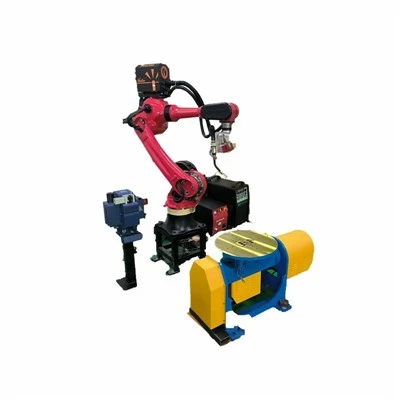
If you’re tired of dealing with rising welder pay, rework costs that eat into profits, and the constant stress of turnover and overtime, it’s time to look at heavy-duty welding robots not as a replacement, but as a partner for your team. To discuss how our custom-tailored heavy-duty welding systems can help your shop reduce labor costs, improve quality, and scale your production, reach out to our team to connect for a detailed consultation and application walkthrough.
Injection Molding Robot Arm References:
- American Welding Society. (2022). 2022 Welder Shortage and Labor Cost Report.
- National Association of Manufacturers. (2023). Manufacturing Turnover and Training Cost Benchmark Report.
- Occupational Safety and Health Administration (OSHA). (2021). Workplace Injury and Cost Data for Welding Operations.
- Fabricators & Manufacturers Association International. (2022). Robotic Waging Cost Savings Analysis for Heavy Fabrication.
Dongguan Chuanglida Intelligent Equipments Co., Ltd.
As one of the most professional heavy-duty welding robots manufacturers and suppliers in China, we also support customized service. Please feel free to buy discount heavy-duty welding robots in stock here from our factory. For price consultation, contact us.
Address: Room 201, Building 2, No.61, Shachang 1st Road, Dalang Town, Dongguan City, Guangdong Province
E-mail: haoguangli001@outlook.com
WebSite: https://www.boruntestech.com/
