Hey folks, it’s Alex from the Wax 3D Printer supplier team — today I’m breaking down something I get asked every single week: “What temps do wax 3D printers actually run at?” If you’re new to wax 3D printing or you’ve messed up a print because you guessed the temp wrong, stick around — this isn’t just random tech jargon, it’s stuff that’s worked for our customers, from jewelry designers to investment casting teams, and it’s gonna save you so many failed prints. Wax 3D Printer
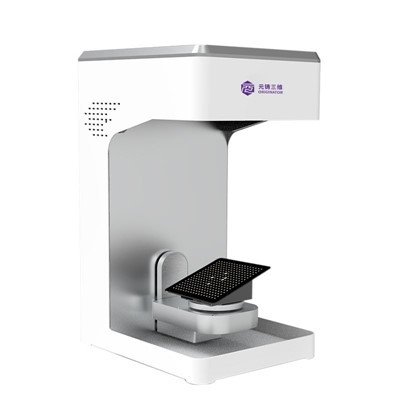
First, let’s cut to the basics: wax 3D printing is way different than printing with plastic (think PLA or resin). That’s why the temp rules aren’t the same. Let’s split this into two core parts everyone cares about: the nozzle temp (what melts the wax to extrude it) and the build plate temp (so your wax doesn’t slide off mid-print). I’m gonna keep the numbers real, no vague “around hot” talk.
First up, nozzle temps. This is the #1 mistake we see new users make. Most standard wax filaments we stock are paraffin-based, right? Those are the workhorses for jewelry and small investment casting. For paraffin wax filaments, the sweet spot for nozzle temp is usually 160°C to 190°C. Wait, don’t just set it to 180°C and call it a day — we’ve seen prints fail because someone cranked it to 210°C, which is too hot. Why? Wax can burn at those temps, leaving tiny charred bits that mess up fine details (like the prongs on a ring or delicate filigree). On the flip side, if your nozzle’s too low, like under 150°C, the wax won’t flow smooth. You’ll get stringy, lumpy extrusions that don’t stick to the previous layer, and half your print will just fall apart mid-run.
Now, if you’re using specialty waxes — like beeswax blends for art projects, or harder casting waxes for industrial parts — the numbers shift a little. Beeswax tends to be a bit softer, so we bump nozzle temp down to 150°C to 170°C. Harder industrial wax blends? We crank it up to 190°C to 210°C, but even then, we warn customers not to go over 220°C — that’s when wax starts to degrade, not just burn. I had a customer last month who printed a custom gear with industrial wax and set the nozzle to 225°C; when they went to cast it, the wax left ash behind in the mold, ruining the whole batch. Lesson learned: check your wax type first before guessing the nozzle temp.
Next, build plate temps. This is the second big variable. If the build plate’s too cold, your wax will cool instantly after extrusion, which causes layer separation — like, two layers won’t stick at all, so your print cracks when you touch it. If it’s too hot, the bottom of your print will warp, especially for larger objects. For most standard paraffin waxes, build plate temp sits at 50°C to 70°C. That range keeps the first layer tacky enough to stick, but not so hot that the whole thing oozes around. For smaller, delicate prints (like earrings or tiny pendants), we recommend 60°C — it’s just warm enough to hold fine details without warping. For bigger prints (like a full bust for a sculpture or a large casting part), drop it to 45°C to 55°C — that way, the bottom cools a little faster, so the whole object doesn’t stretch or warp as it builds.
Wait, what about chamber temps? A lot of new users forget about the enclosed chamber on our wax printers, right? Wax is sensitive to ambient temp, so if your workspace is super cold (like a basement in winter, below 20°C), you might need to bump the chamber temp up 5°C to 10°C. No chamber? Don’t panic, but you might have to tweak temps — if your workshop is under 15°C, the wax cools way too fast, so your prints will come out stringy. We always tell customers to test a small temp calibration print first, like a 10mm cube, to adjust without wasting a whole filament spool.
Let’s talk about common myths I hear all the time. First: “Higher temp = better flow.” Nope, not for wax. Wax’s melting point is low compared to plastic, so too much heat doesn’t make it flow smoother — it makes it runny, which ruins layer height and fine details. Second: “All wax printers run the same temps.” Absolutely not — we’ve worked with 3 different wax brands, and their filaments have slightly different formulas, so temp ranges can shift 10-15°C either way. That’s why we send a free temp guide with every printer we sell, tailored to the filaments we stock.
Here’s a quick pro tip I learned from years of helping customers: if you’re getting stringy prints, don’t just crank the nozzle temp up. Drop it 5°C, and check your retraction settings first. Stringing is usually a retraction issue, not a temp issue. And if your print is lifting off the build plate mid-print, bump the build plate up 10°C, or add a thin layer of glue stick to the plate — that’s a quick fix that doesn’t involve messing with core temps.
Wait, what about resin-based waxes? Some people use wax resin for SLA printers, not filament extrusion. I get that, too — resin waxes are popular for ultra-fine jewelry details. For SLA wax resins, the temps work a little different: you’re not melting it, you’re curing it, so the “operating temp” is the resin’s curing temp, usually 40°C to 50°C in the resin vat. That’s to make sure the resin cures evenly, no soft spots. If the vat is too cold, the resin doesn’t cure fully, so your wax print will be fragile and break when you demold it. If it’s too hot, the resin cures too fast, leading to layer lines that are hard to sand down. I had a jewelry designer tell me last year that switching their SLA vat temp from 35°C to 45°C cut their print failure rate by 70% — that’s a huge difference for small businesses that can’t afford wasted material.
Another thing: when you’re done printing, don’t pull the wax off the printer right away. Wait 10-15 minutes for the temp to drop, especially for big prints. If you yank a warm wax print off, it’ll bend or break. We include a cooling tray with all our printers for exactly that reason.
Let’s tie this all together, because I know it’s easy to get lost in numbers. The baseline, no-fail temp ranges for extrusion wax filament (our most popular product):
- Nozzle: 160°C – 190°C (adjust ±5°C for your specific wax type)
- Build Plate: 50°C – 70°C
- Chamber (if applicable): +5°C to 10°C if your workspace is below 20°C
For SLA wax resin:
- Vat Temp: 40°C – 50°C
- Post-Cure Temp: 60°C – 70°C (for 10-15 minutes, to harden the wax for casting)
Now, I know a lot of you are probably thinking, “This is great, but I still don’t want to guess — I need to get it right for my first big print.” That’s exactly why I wanted to put this out: too many new folks waste money on failed prints because they use the wrong temp. We’ve tested every temp range with our printers and our filaments, so we know what works, and we’re here to help you avoid that hassle.
If you’re looking to get a wax 3D printer, or you’re struggling with current print temps, hit us up for a custom chat. We can walk you through calibrating your temp, suggest the right filament for your project, and even send over a free test spool so you can nail your first print without wasting a full roll. No pressure, no sales pitches — just people who’ve been in the wax printing game for years, helping other makers get it right.
Wax 3D Printer References:
- Investment Casting Institute. (2022). Wax 3D Printing Guidelines for Casting Applications.
- Additive Manufacturing for Jewelry Magazine. (2023). Temperature Calibration for Wax 3D Printing Filaments.
- International Journal of Advanced Manufacturing Technology. (2021). Thermal Behavior of Paraffin-Based Wax Filaments for Extrusion-Based 3D Printing.
Hangzhou Originator 3D Technology Co., Ltd.
Hangzhou Originator 3D Technology Co., Ltd. is one of the most experienced wax 3d printer manufacturers and suppliers in China. With abundant experience, we warmly welcome you to wholesale high quality wax 3d printer made in China here from our factory. Contact us for more details.
Address: Room 403, Building 2, Block B, Heda Incubation Park, No.452, 6th Avenue, Xiasha, Qiantang District, Hangzhou, Zhejiang, China
E-mail: Sales@originator3d.com
WebSite: https://www.originator3d.com/
