Do Foil Lined Bags Block UV Rays? Foil Lined Bag

As a supplier of foil lined bags, I often get asked about the effectiveness of these bags in blocking UV rays. It’s a crucial question, especially for industries that deal with products sensitive to UV light, such as food, pharmaceuticals, and certain chemicals. In this blog, I’ll delve into the science behind foil lined bags and their ability to block UV rays, exploring the factors that influence their performance and sharing some real – world applications.
The Science of UV Rays and Foil
First, let’s understand what UV rays are. Ultraviolet (UV) radiation is a part of the electromagnetic spectrum with wavelengths shorter than visible light, ranging from 100 to 400 nanometers (nm). UV rays are classified into three types: UVA (320 – 400 nm), UVB (280 – 320 nm), and UVC (100 – 280 nm). UVC rays are mostly absorbed by the Earth’s atmosphere, while UVA and UVB rays can reach the Earth’s surface and cause damage to various materials and living organisms.
Foil, typically made of aluminum, is a metal with unique reflective properties. Aluminum has a high reflectivity for a wide range of wavelengths, including UV rays. When light, including UV light, hits the surface of the foil, a significant portion of it is reflected back. This is due to the smooth and shiny surface of the foil, which allows it to act as a mirror for electromagnetic waves.
The principle behind the UV – blocking ability of foil lined bags is based on this reflectivity. The foil layer in the bag reflects UV rays, preventing them from penetrating through the bag and reaching the contents inside. However, the effectiveness of the UV – blocking depends on several factors.
Factors Affecting UV – Blocking Performance
Foil Thickness
The thickness of the foil plays a crucial role in its ability to block UV rays. Thicker foils generally offer better UV protection. A thin foil may have some gaps or imperfections that could allow UV rays to pass through. For example, a very thin foil might have microscopic holes or uneven areas where the reflectivity is reduced. In contrast, a thicker foil provides a more continuous and effective barrier, reflecting a higher percentage of UV rays.
Foil Quality
The quality of the foil also matters. High – quality foils are made with pure aluminum and have a smooth, uniform surface. Impurities in the aluminum can reduce its reflectivity, and a rough or uneven surface can scatter the UV rays rather than reflecting them effectively. When choosing foil for lined bags, it’s important to select a high – quality product to ensure optimal UV – blocking performance.
Bag Construction
The way the foil lined bag is constructed can impact its UV – blocking ability. A well – constructed bag will have the foil layer firmly attached to the other layers of the bag, without any wrinkles or gaps. If there are wrinkles in the foil, it can create areas where the UV rays can penetrate. Additionally, the seams of the bag need to be properly sealed to prevent UV rays from entering through the edges.
External Conditions
External conditions such as the intensity of the UV light and the angle of incidence also affect the performance of the foil lined bag. Higher – intensity UV light may require a more robust foil lining to block effectively. The angle at which the UV rays hit the bag can also influence the reflection. When the UV rays hit the bag at a perpendicular angle, the reflection is more efficient compared to a glancing angle.
Real – World Applications
Food Industry
In the food industry, many products are sensitive to UV light. Exposure to UV rays can cause food to spoil, lose its nutritional value, and develop off – flavors. Foil lined bags are widely used to package products such as coffee, tea, nuts, and dried fruits. These bags protect the food from UV – induced damage, extending its shelf life and maintaining its quality. For example, coffee beans are highly susceptible to oxidation and flavor degradation when exposed to UV light. A foil lined bag can keep the coffee fresh by blocking UV rays and preventing oxygen from entering.
Pharmaceutical Industry
Pharmaceutical products often need to be protected from UV light to maintain their efficacy. Many drugs can degrade when exposed to UV rays, leading to a loss of potency and potentially harmful side effects. Foil lined bags are used to package medications, vitamins, and other pharmaceutical products. They provide a reliable barrier against UV radiation, ensuring that the drugs remain stable and effective throughout their shelf life.
Chemical Industry
Certain chemicals are also sensitive to UV light. UV rays can trigger chemical reactions that change the properties of the chemicals, making them less effective or even dangerous. Foil lined bags are used to store and transport these chemicals, protecting them from UV – induced degradation. For example, some photo – sensitive chemicals used in the manufacturing of electronic components need to be kept in UV – protected packaging to ensure their quality.
Testing the UV – Blocking Ability
To determine the effectiveness of foil lined bags in blocking UV rays, various testing methods can be used. One common method is to measure the transmittance of UV light through the bag. A UV spectrophotometer can be used to measure the amount of UV light that passes through the bag at different wavelengths. A lower transmittance value indicates better UV – blocking performance.
Another way to test is through accelerated aging tests. In these tests, the bag and its contents are exposed to high – intensity UV light for a certain period of time. The condition of the contents is then evaluated to see if there has been any UV – induced damage. This can give an indication of how well the bag will protect the contents over a longer period of time under normal conditions.
Conclusion
In conclusion, foil lined bags are generally effective in blocking UV rays. The reflective properties of the aluminum foil allow it to reflect a significant portion of the UV light, protecting the contents of the bag from UV – induced damage. However, the effectiveness depends on factors such as foil thickness, quality, bag construction, and external conditions.
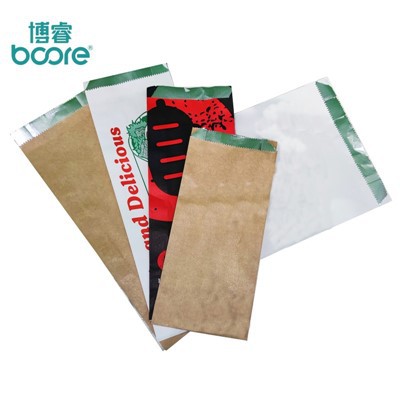
For industries that require UV – protected packaging, foil lined bags are a reliable solution. They have been proven to extend the shelf life and maintain the quality of products in the food, pharmaceutical, and chemical industries.
PE Coated Paper If you are in need of high – quality foil lined bags for your products, I encourage you to reach out to discuss your specific requirements. Our team is dedicated to providing the best packaging solutions to meet your needs and ensure the protection of your valuable products.
References
- "The Physics of Light and Matter" by Richard P. Feynman
- "Packaging Technology for Food Products" by Timothy J. Seal
- "Pharmaceutical Packaging: Principles and Practice" by Michael A. Johnson
Qingzhou Bright Packaging Technology Co., Ltd.
As one of the leading foil lined bag manufacturers and suppliers in China, we also support customized service. Welcome to wholesale high quality foil lined bag at competitive price from our factory. If you have any enquiry about quotation, please feel free to email us.
Address: 1 Yanying Road, Naoshan Development Zone, Qingzhou, Shandong Province, China
E-mail: Sales12@brpack.com
WebSite: https://www.qzbrpack.com/
