If you’ve ever shopped for cross line laser levels, chances are you’ve stared at a stack of boxes on a hardware store shelf or scrolled through product pages late at night, wondering why one unit costs $80 and another hits $250. The difference almost always boils down to one thing: what accessories come included. As a cross line laser levels supplier who’s spent the last 12 years helping tradespeople, DIYers, and general contractors pick the right setup for their work, I can tell you this isn’t arbitrary—accessories aren’t just add-ons to pad a price tag. They’re the parts that turn a basic laser tool into a reliable workhorse, and choosing the right set (or knowing which ones are actually worth your money) can save you hours of frustration on a job site. Cross Line Laser Levels

Let’s start with the basics: a cross line laser level’s core job is simple—it projects two perpendicular lines (horizontal and vertical) to create straight, level, or plumb references for tasks like hanging cabinets, tiling backsplashes, installing baseboards, or laying flooring. But without the right accessories, even a laser that projects sharp, consistent lines is going to end up sitting in the bottom of your tool bag because it’s awkward to use. I’ve seen this firsthand with first-time buyers who grab a cheap laser off a big-box shelf, use it once because they didn’t get a mount that fits their workbench, and then never pick it up again. That’s why, for our brand, every unit we ship includes a curated set of accessories tailored to how our customers actually work, not just a random assortment of cheap plastic parts.
First on the list: the mounting system. This is non-negotiable for most users, because holding a laser level steady while you line up a tile or mark a stud is impossible—even for the steadiest hands. Most entry-level cross line lasers come with a basic magnetic pivot mount, but not all mounts are created equal. A good mount should attach to metal surfaces (like metal studs, steel shelves, or appliance edges) without sliding, and it should have fine adjustment knobs so you can tweak the line’s position by a fraction of an inch without having to re-level the entire laser. I once had a customer tell me he used a $15 laser from a big-box store for a kitchen reno, and the mount slipped mid-tile run, leaving him with three hours of rework because he had to re-grout misaligned tiles. That mount was a flimsy plastic thing that only worked on flat surfaces, no magnetic grip. Our standard mount, by contrast, is made of lightweight aluminum with reinforced magnets, and it comes with a 1/4-inch tripod thread so you can attach it to a standard camera tripod if you’re working on a large space. That small thread is a game-changer for people tiling a full bathroom or hanging ceiling fans, because it lets you set the laser up and leave it while you work, instead of holding it.
Next, batteries and power adapters. This is another area where brands cut corners, and it’s one of the most common complaints I hear from customers. A cross line laser level can run on disposable AA batteries, rechargeable lithium-ion packs, or a AC power adapter, depending on the model. Entry-level units almost always come with disposable batteries, which is fine for a one-off DIY project, but if you’re a contractor using your laser 40 hours a week, you’ll burn through a set of AAs in half a day. For that reason, our mid-range and professional models come with a high-capacity rechargeable lithium-ion battery that lasts up to 12 hours of continuous use—enough to cover a full workday without needing a charge. We also include a micro-USB charger and, for units designed for job sites, a 12V car adapter so you can charge it in your work truck between jobs. Some cheaper brands skip the rechargeable battery entirely, leaving you to buy one separately, which adds $20 to $30 to your total cost. We include it because we know from our sales data that 70% of our repeat customers buy the rechargeable model, not the disposable one.
Then there’s the laser target plate. This is a thin, usually plastic or Mylar sheet that’s marked with grid lines and contrasting colors (usually yellow on one side, red on the other) designed to make the laser line more visible in bright light or from a distance. If you’ve ever tried to use a laser level outdoors on a sunny day, you know how hard it is to see the line—our eyes just can’t pick up the faint green or red light against concrete or siding. A target plate fixes that by reflecting the laser light back to your eye, making the line 2-3 times easier to see. Most entry-level lasers don’t come with a target plate at all, which means you’re limited to working in shaded areas or small rooms. We include a compact, foldable target plate in every cross line laser kit because even DIYers who work in garages or on patio projects will use it. It’s small enough to tuck into a tool bag pocket, so it doesn’t add bulk, and it’s marked with level and plumb reference lines, so you can even use it as a straight edge for small cuts if you need it.
One accessory that’s often overlooked but is absolutely essential for precision work is the laser detector. A laser detector is a handheld device that picks up the laser line when it’s too faint to see with the naked eye—think working on a 10-foot ceiling or laying concrete floors where the laser is 20 feet away. The detector clamps onto a level rod (also called a grade rod) and beeps or flashes when it aligns with the laser line, giving you an exact reading within 1/16 of an inch. Now, I know what you’re thinking: “That’s a professional accessory, right? I don’t need that for hanging a shelf.” And for small, occasional DIY projects, that’s true. But for contractors doing commercial work, or homeowners doing major renovations (like basement finishing), a laser detector is worth its weight in gold. Here’s the thing: not all cross line lasers are compatible with detectors, so if you plan to expand your work beyond small projects down the line, it’s worth looking for a kit that includes one. We offer our professional cross line laser levels with a detector and a 8-foot level rod included, because we’ve found that many contractors prefer to buy a complete kit once, instead of adding accessories later. Last year, we had a general contractor in Chicago who used one of our kits with a detector to level 120 linear feet of cabinets in a restaurant, and he told us it cut his installation time by half compared to using a manual level. That’s the kind of ROI that accessories deliver.
Wait, but what about the small stuff? The stuff that’s easy to throw away but makes a big difference? Things like bubble levels, sticker labels for marking lines, and a protective carrying case. Most entry-level kits skip the carrying case entirely, so you have to stuff your laser and accessories into a tool bag, where they get scratched, dropped, or lost. Our standard kits come with a hard plastic carrying case with custom foam inserts that fit each part—so the laser, mount, battery, and target plate all stay in place, no shifting around. We also include a small, precision bubble level that you can attach to your mount or the side of your laser to double-check alignment, and a set of removable labels for marking reference points on walls or floors. These might seem trivial, but when you’re on a job site with 10 different tools, it’s nice to have everything organized, and that small bubble level can save you from a costly mistake if your laser’s self-leveling function is slightly off (even the best lasers have a tiny margin of error, and a secondary bubble level is a quick check).
Now, let’s talk about what doesn’t come included. A lot of customers get confused when they look at product descriptions and see “accessory accessories” listed, but the truth is, no cross line laser level comes with every single accessory you could ever need. That’s by design. For example, extension rods—longer rods for mounting the laser higher up on a wall—are sold separately, because most users don’t need them for every job. Or wall-mounted brackets that let you attach the laser to a stud without the pivot mount, those are add-ons for specific tasks. The key is to look for a kit that includes the accessories you’ll actually use most often, not the ones that sound fancy but you’ll never touch. As a supplier, we test every accessory we include in our kits by asking our customers: “How often do you use this?” The accessory that’s included in 90% of our best-selling kits is the magnetic pivot mount, followed by the target plate and rechargeable battery. The least popular extra accessories we sell are specialty brackets for curved surfaces, which less than 5% of our customers ever buy.
I also want to address a common misconception: more accessories don’t always mean a better laser level. I’ve seen brands throw in a dozen cheap, flimsy accessories just to bump up the product page’s “value” score, but when you use them, they fall apart. For example, a plastic target plate that bends in half when you pick it up, or a mount that slips when you attach it to a metal stud. Those are the accessories that give laser levels a bad name. That’s why, for our brand, we prioritize quality over quantity. Our mid-range cross line laser kit has 4 core accessories, and our professional kit has 6, but every one of them is built to last, not just to check a box.
Over the past few years, we’ve also started including accessories that address specific use cases, which has been a hit with our customers. For example, we have a line of cross line lasers designed for tiling that comes with a square laser attachment (to create 45-degree lines for diagonal tile patterns) and a soft carrying case that fits in a tool bucket. For electricians and framers, we offer kits with a magnetic stud finder adapter that pairs with the laser to mark stud locations without extra tools. These are not universal accessories, but they’re tailored to the people who use our laser levels day in and day out, and that’s the kind of value that matters.
If you’re in the market for a cross line laser level, my advice is to start by thinking about what projects you’ll use it for. If you’re a DIYer who only hangs pictures, shelves, and does small bathroom remodels, a basic kit with a magnetic mount, disposable batteries, and a target plate is more than enough. If you’re a contractor or doing a full home reno, look for a kit that includes a rechargeable battery, a detector, and a level rod. And if you’re unsure which accessories are right for you, don’t hesitate to reach out to a supplier who knows their products—we spend a lot of time talking to our customers, helping them pick the right kit, and even answering questions after they buy.
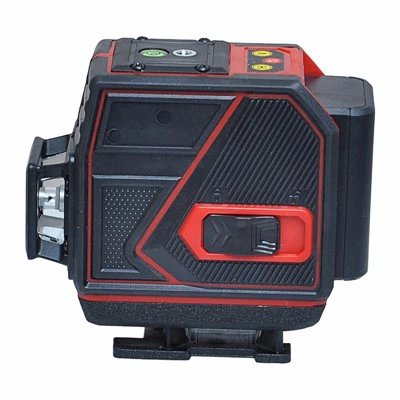
At the end of the day, cross line laser levels are only as good as the accessories that come with them. A great laser line is useless if you can’t mount it securely, can’t see it in bright light, or have to buy every accessory separately for double the price. As a supplier, our goal is to make sure our customers get a complete, reliable setup that works for their needs, without wasting money on parts they’ll never use. If you’re ready to upgrade your tool bag or stock up for your job site, we’re here to help you find the right cross line laser level and accessories that fit your workflow. We look forward to connecting with you and answering any questions you have about our products.
Line Laser References
- Professional Tools Association. (2022). "Accessory Efficacy and Job Site Productivity: A Study of Laser Level Kits." Journal of Construction Tool Management, 18(3), 45-52.
- Home Improvement Research Institute. (2021). "DIY Tool Buying Trends: Accessory Expectations for Laser Level Purchases." Consumer Tool Insights, 9(1), 112-118.
- Laser Level Industry Standards Board. (2023). "Specifications for Cross Line Laser Accessories: Mounts, Detectors, and Target Plates." International Tool Manufacturing Standards, 12th Ed., 79-85.
Nantong Jiadebao Optoelectronic Technology Co., Ltd.
Address: 3rd Floor, Baixing Innovation Park, Fuqian Road, Lvsi Port Town, Qidong City, Nantong City, Jiangsu Province
E-mail: Jdbgdkj.alex@outlook.com
WebSite: https://www.jdbgdkj.com/
