Hey there, if you’re someone who’s been deep in the ferroalloy game, you know low-carbon ferroalloys aren’t just a trendy buzzword right now—they’re the future of making steel that actually aligns with all those net-zero goals we’re all chasing. As a ferroalloy supplier who’s spent the last decade tweaking every step of our process to nail low-carbon specs, I get how confusing the production requirements can feel if you’re new to this side of the industry. It’s not just cranking out metal with less carbon, y’know? There’s a whole laundry list of things you gotta get right, from raw materials to the final quality checks, and I’ve learned most mistakes come from skipping a small, seemingly trivial step. Let me break this down like I would chat with a fellow supplier or a steelmaker friend—no stuffy jargon, just real talk from someone who’s stood right next to the furnaces while we tested a batch that almost tanked because we used the wrong coke. Ferroalloy
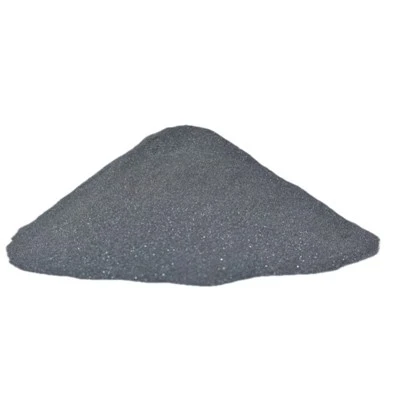
First off, raw materials are non-negotiable here. Regular ferroalloys can get away with lower-grade stuff, but low-carbon? You need top-shelf inputs that don’t sneak in extra carbon. Let’s start with the main ore—say, ferrosilicon or ferrochromium, the two big ones for low-carbon grades. If you’re working with chrome ore, it can’t have that much gangue (the rocky, useless stuff) because gangue usually has carbon or other impurities that’ll mess with your final count. We only source our chrome ore from mines that can prove their carbon content is under 0.1%—no cutting corners here. And that’s not all. The other key raw material is reductant, right? Normally, people use coke, but coke is loaded with carbon, so we can’t use that. We switched to calcined petroleum coke that’s been processed to strip out extra carbon, or even charcoal briquettes if we’re making super low-carbon stuff. Wait, and the binders for those briquettes? They can’t have any petroleum-based goop that adds carbon—we use starch from corn, no joke. If you skip that, you’ll end up with a ferroalloy that’s got 0.5% more carbon than you quoted, and that’s a fast track to losing a client. Oh, and don’t sleep on the flux. We use lime or dolomite, but they gotta be dried completely—even a tiny bit of moisture might not sound like a big deal, but when you’re heating stuff to thousands of degrees, moisture splits into hydrogen and oxygen, and hydrogen can react with carbon in the mix (wait, no, actually it’s that wet flux adds ash that carries carbon, right? Yeah, that’s the part I messed up on my first low-carbon batch, so I never forget it).
Next, the furnace setup and process parameters. This is where the magic happens, or where things go sideways fast. We use electric arc furnaces (EAFs) for most low-carbon ferroalloys, not the older submerged arc furnaces that use coke as a heat source. EAFs let us control the heat way better, and we can adjust the atmosphere—wait, atmosphere control is a big one I almost left out. If there’s oxygen in the furnace, it’ll react with the carbon trying to stay in the ferroalloy, which is good? No, wait, no—we don’t want oxygen reacting with our carbon, we want to keep it low because we’re trying to limit total carbon. Wait, let me get that straight: low-carbon ferroalloy means the final C content is usually under 0.1% (sometimes even 0.05% for ultra-low). So we need a controlled atmosphere, either inert (argon or nitrogen) or slightly oxidizing? No, actually, slightly reducing? Wait, no—if we have too much oxygen, it will oxidize the carbon in the alloy, which would lower it, but we have to balance that so we don’t oxidize the other elements we want, like chromium or silicon. Oh right, it’s a tightrope. We run our EAFs at a constant voltage and current, no big spikes that might let carbon sneak in. We also add the reductant in small, measured batches, not all at once. If you dump too much coke (even the good stuff) in one go, it doesn’t get fully processed, and you end up with leftover carbon in the final product. I’ve seen a supplier do that once—they tried to speed up production by adding all their calcined coke at once, and their whole batch was rejected because it had 0.3% C, way over their low-carbon spec. Lesson learned: slow and steady wins the race here.
Then there’s the refining step, which is make or break for low-carbon grades. A lot of people think “furnace output is final,” but no—you gotta refine the alloy after it comes out of the EAF. For low-carbon ferrochrome, we use a process called argon oxygen decarburization (AOD), and for ferrosilicon, sometimes vacuum oxygen decarburization (VOD). Here’s how AOD works, quick and dirty: you blow oxygen and argon through the molten metal. The oxygen reacts with the excess carbon, turning it into CO gas that bubbles out, and the argon helps flush that CO away so it doesn’t get reabsorbed. But you have to get the mix of O2 and argon just right—too much O2, and you’ll oxidize the chromium you need, which is a waste, too little, and you don’t remove enough carbon. We test the gas mix every minute, use real-time sensors that adjust automatically, not just manual dials. That AOD step is where we cut carbon from, say, 1% (before refining) down to 0.08% (after refining). If we skipped that, we couldn’t call it low-carbon. I’ve had a technician forget to switch from O2 to argon at the right point once, and we lost a whole ton of high-grade ferrochrome—worst part was we had to tell our client we had to delay their order because we had to re-refine it. Never again, we added a double-check system with another tech and a digital log that can’t be edited, so that mistake never repeats.
Quality control is another big one—you can’t just guess at carbon content. We use two tests: a quick X-ray fluorescence (XRF) test right after refining to get a preliminary reading, then a lab test with combustion analysis to confirm once the metal has solidified. Combustion analysis is the gold standard because it burns the sample and measures the CO2 released, which tells you exactly how much carbon is there. We test every single batch, no exceptions. If a batch comes back over spec, we either re-refine it or sell it as a regular (not low-carbon) grade—we’d never pass off over-carbon metal to a client. Reputation is everything in this business, and our clients (mostly steelmakers) rely on us because their own low-carbon steel specs depend on our ferroalloys. If we cut corners, they’ll go to another supplier, and that’s a hole you can’t dig your way out of.
Wait, also, energy efficiency ties into this, right? Because low-carbon ferroalloy isn’t just about the final product’s carbon, it’s also about the process emissions. A lot of suppliers forget that part now, because the industry is moving toward full lifecycle carbon accounting. So we use 100% renewable electricity in our EAFs—solar and wind, no coal power here. That lowers the scope 2 emissions from our production, which means our customers can use our ferroalloy to make steel that counts toward their net-zero targets. It’s not just about the C in the metal itself anymore; it’s about the whole process being low-carbon. That’s a requirement now, not an option—our clients ask for our carbon footprint reports before they even talk about pricing, so we had to set up a system to track every kWh, every raw material’s emissions, and calculate our total lifecycle emissions for each batch. I think that’s a big part most people miss when they think low-carbon ferroalloy production—it’s not just the product, it’s the whole supply chain.
Now, let’s talk about common pitfalls I see new suppliers falling into. First, using low-grade reductants to save a few bucks. I get it, calcined petroleum coke is more expensive than regular coke, but the cost of reworking over-carbon batches or losing clients is way higher. Second, skipping the refining step. A lot of small suppliers try to sell EAF output as low-carbon without AOD or VOD, and they get caught every time. Third, not controlling the furnace atmosphere—too much or too little oxygen, and you mess up both carbon and other alloy elements. Fourth, not testing every batch. I’ve heard horror stories of suppliers testing once a day for 10 batches, and when one is bad, they have to re-ship or issue refunds, which is bad for business and bad for the industry’s rep with climate goals.
So if you’re a steelmaker looking for low-carbon ferroalloy, you know what to check for: raw material specs from your supplier, proof of atmosphere control, refining processes used, and real batch test results. And if you’re a supplier looking to get into this space, take it slow—invest in the right equipment (EAFs, AOD/VOD, combustion analyzers), source your raw materials from trusted, low-carbon mines, and build a QC process that’s non-negotiable. It’s not easy, but it’s worth it, because the demand for low-carbon steel is only going up—every major country has net-zero targets, so steelmakers need our ferroalloys to hit those.

At the end of the day, low-carbon ferroalloy production is a mix of science, attention to detail, and integrity. You can’t just wing it—every step, from the ore you mine to the test you run, matters. For us, it’s not just making a product; it’s contributing to a bigger goal of cutting emissions across the entire steel industry. If you’re in the market for low-carbon ferroalloys and need a supplier that stands by their specs, hit us up to chat about your needs, we’re here to make this work for you.
Other Ferroalloy References:
- International Ferroalloys Association. (2022). Low-Carbon Ferroalloy Production: Technical Guidelines and Best Practices.
- World Steel Association. (2023). Lifecycle Carbon Accounting for Ferroalloys in Steel Manufacturing.
- US Department of Energy. (2021). Electric Arc Furnace Operations for Low-Carbon Ferroalloy Production.
Anyang Baitengxin Metal Co., Ltd.
As one of the most professional ferroalloy manufacturers in China, we have world-leading production equipment and strong manufacturing capabilities. Please feel free to buy high quality ferroalloy for sale here from our factory. Good service and reasonable price are available.
Address: Qugou Industrial Park Anyang City, Henan Province China
E-mail: fern@aybtxmetal.com
WebSite: https://www.aybtx-metal.com/
