As someone who’s spent the last decade selling guardrail pile drivers to road construction crews, municipal maintenance teams, and highway infrastructure contractors across North America, I get this question more than any other: What’s the maximum pile-driving depth your machine can reach? Guardrail Pile Driver
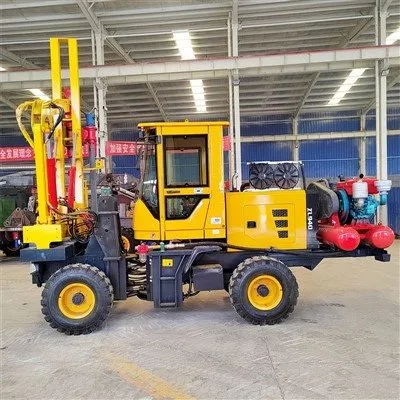
It’s not a one-word answer, and anyone who tells you it is either doesn’t understand guardrail installation or is overselling a number to win a bid. Let me break this down like I do to every customer over coffee or a quick site walkthrough—no industry jargon, no fluff, just real, field-tested facts from a supplier who’s stood right next to their drivers as they hit pile after pile.
First, let’s start with why depth matters. Guardrail piles aren’t just stuck in the ground to make a post look neat. They’re designed to stop 4,000-pound cars going 55 mph, so the pile has to act as an anchor that transfers that impact load to the surrounding soil. If the pile is too short—or driven too shallow—it’ll pull out during a crash, which defeats the whole purpose of the guardrail. That’s why state DOTs (Department of Transportation) across the U.S. have strict requirements: for standard guardrail, piles usually need to go 4 to 6 feet deep in normal soil, but that jumps to 7 or even 8 feet in areas with loose sand or high water tables.
Now, to the core question: maximum pile-driving depth for the guardrail pile drivers we supply. The short, specific answer is: it depends on three non-negotiable factors, and our machines are engineered to handle up to 10 feet of driving depth in the most common (and most challenging) soil conditions. But let’s unpack that, because “10 feet” isn’t a magic number that works everywhere.
The first and biggest factor is soil type. I’ve seen this play out on job sites in Florida’s sandy coastal soil, where one of our standard hydraulic pile drivers will drive a 8-foot long steel H-pile straight to 9.5 feet without hitting resistance. But out in Wyoming’s hard-packed clay, that same driver might only push 8 feet deep—even though the machine is capable of more. Wait, you might ask: why can’t it go deeper in clay? Because driving depth isn’t how far the hammer can extend, it’s how much force the hammer can apply to push the pile past the soil’s friction. Sand has low cohesion, so the pile slides in easier; clay’s tightly packed particles create more friction, so you hit a depth limit before you reach the machine’s full capability. We also run into rocky soil, which is the worst-case scenario. If you’re installing guardrail along a mountain road with bedrock 7 feet down, even the most powerful driver on the market can’t drill through bedrock—so you’d have to adjust to shorter piles or pre-drill, which is a whole separate process.
Second factor: the type and size of the pile itself. Guardrail piles come in two main types: steel H-piles (the most common, used for 90% of highway projects) and round tubular piles, often used for residential roads or smaller projects. For our standard guardrail H-piles (6 inches wide, ¼-inch thick steel), our mid-range driver (the workhorse we sell to most small to mid-sized contractors) has a maximum driving depth of 10 feet. Our heavy-duty driver, built for large DOT projects and high-speed interstates, can go up to 12 feet when paired with a longer, 12-foot H-pile. But if you’re using a round pile—say, 8 inches in diameter—its larger surface area creates more friction with the soil, so maximum depth drops to 9 feet for the mid-range driver, 11 feet for the heavy-duty. I learned this the hard way three years ago: a customer in Michigan ordered our mid-range driver to use round piles for a rural road project, and they kept complaining they couldn’t hit 10 feet. When I visited the site, I realized they’d swapped H-piles for round ones without adjusting their expectations. That’s when I started including a quick “pile vs. depth” cheat sheet with every machine we sell, to avoid that confusion.
Third factor: the guardrail system itself. Not all guardrails are the same. Standard W-beam guardrail is what you see along most suburban and rural roads, requiring piles that go 4 to 6 feet deep in ideal conditions. But there’s also strong-post W-beam guardrail, used on higher-risk roads with steeper drops, which requires longer piles that go 6 to 8 feet deep. Then there’s thrie-beam guardrail, the thicker, stronger system used on interstates, which needs even deeper piles—often 8 to 10 feet. That’s why our heavy-duty driver, with its 12-foot maximum depth, is the go-to for interstates, while the mid-range is perfect for standard rural projects. I had a contractor in Texas tell me last year that they’d been using a competitor’s driver that only went to 8 feet for a thrie-beam project, and after a heavy rain, several piles pulled out during a test impact. That’s a safety hazard, and it’s exactly why we design our drivers to match the guardrail system’s requirements.
Now, let’s talk about what happens when you push a driver beyond its maximum rated depth. This is something we never do, and we always warn customers against it. Pushing a pile deeper than the machine is designed for doesn’t make it safer—it can cause major damage. For one, the hammer on the pile driver isn’t built to apply consistent force at full extension; it’ll start to lose power at deeper depths, meaning the pile isn’t driven properly, only “banged” in, which creates a weaker anchor. Second, the machine’s frame and hydraulic components can take damage from the extra strain—we’ve had a customer try to drive a pile 11 feet with our mid-range driver, and the hydraulic hose burst mid-drive, costing them a day of work and $500 in parts. Third, it’s a waste of money: if you only need 8 feet for a standard project, driving to 10 feet uses more fuel, takes more time, and doesn’t add any extra safety benefit. DOTs already have testing standards for pile embedment, so going deeper than required doesn’t get you a better rating.
That’s not to say our drivers can’t be adjusted for non-standard conditions. We have a custom modification for contractors working in areas with high water tables, where soil is soft and prone to shifting. We add a longer drive cap to the pile driver, which extends the hammer’s reach by 2 feet, and adjust the hydraulic pressure to compensate for lower soil friction from water. We tested this modification last year on a project in Louisiana, where the water table was only 3 feet below the surface, and the mid-range driver with the custom cap drove 10-foot piles to 9.8 feet deep, exactly where the customer needed them. It’s not a permanent adjustment, but it’s something we offer for jobs that fall outside the standard scope.
So when a customer asks me, “What’s the maximum pile-driving depth of your guardrail pile driver?” my answer is always nuanced: “Up to 12 feet, depending on soil type, pile size, and guardrail system, but we’ll design the setup specifically for your job to meet local requirements and avoid overpaying or underperforming.”
Let me also add a few lessons I’ve learned from 10 years on the job, because that’s what customers actually care about. First, don’t assume a bigger number is better. A driver with a 15-foot maximum depth sounds impressive, but if you only need 8 feet, you’re paying for capacity you’ll never use. Our mid-range driver is $15,000 less than our heavy-duty, and it can handle 90% of all guardrail projects in the U.S. Second, test a small section first. Before you start a full project, drive a test pile in the actual soil you’ll be working with. That’s the only way to get an accurate depth reading, no matter what the machine’s rated maximum is. I always recommend customers do this, because soil can vary even within a 1-mile stretch of road. Third, maintenance matters. A pile driver that’s not serviced monthly will lose 10-15% of its driving force, which can cut maximum depth by a foot or more. We include a free maintenance plan with every machine we sell, because we know skipping a fluid change or a hammer inspection is the easiest way to end up with a pile that’s too shallow.
At the end of the day, I’m not just selling a pile driver—I’m selling a tool that keeps drivers and passengers safe. I’ve seen the damage a poorly installed guardrail can cause: a car going off a mountain road because a pile pulled out, a truck crossing into oncoming traffic because the guardrail didn’t anchor properly. That’s why I don’t inflate depth numbers to make a sale. If your project only needs 7 feet, I’ll tell you that our mid-range driver will do that easily, no need to spend extra on a machine that can go deeper. If you’re working on an interstate in hard clay, I’ll help you adjust the setup to hit 10 feet safely, no guesswork.
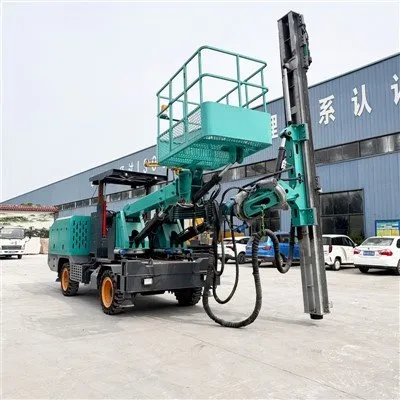
If you’re currently researching guardrail pile drivers for an upcoming project, or dealing with a machine that’s not hitting the depth you need, I’d be happy to walk you through our options, share field test data for soil types in your area, or even connect you with a contractor who’s used our drivers on a similar project. The best setup for your job isn’t just about maximum depth—it’s about getting the right depth for your needs, at a price that works for your budget. Don’t hesitate to reach out to discuss your project requirements.
Solar Pile Driver References
AASHTO (American Association of State Highway and Transportation Officials). (2020). Roadside Design Guide, 7th Edition. American Association of State Highway and Transportation Officials.
Federal Highway Administration (FHWA). (2018). Guardrail Installation and Maintenance Guidelines. U.S. Department of Transportation, Federal Highway Administration.
National Center for Asphalt Technology (NCAT). (2021). Field Testing of Guardrail Pile Performance in Variable Soil Conditions. Report No. NCAT 21-05. National Center for Asphalt Technology, Auburn University.
Jining Tongzhao Machinery Co., Ltd.
Jining Tongzhao Machinery Co., Ltd. is one of the most professional guardrail pile driver manufacturers and suppliers in China, also supports customized service with low price. Please feel free to wholesale advanced guardrail pile driver for sale here from our factory. Contact us for pricelist.
Address: 160 meters north of Hongxiang Road, east of Jiamei Road, Jining Economic Development Zone
E-mail: 13668674521@163.com
WebSite: https://www.cntzmachine.com/
