If you’re reading this, chances are you’re working with ASTM IPS Inch Butt Fusion Fittings—whether for water distribution systems, industrial piping, or municipal infrastructure—and you know firsthand that these fittings are the unsung heroes of leak-free, long-lasting pipe networks. As someone who’s spent the last 18 years as a supplier of these specific fittings, I’ve seen firsthand what happens when maintenance is an afterthought: premature failures, costly on-site repairs, and projects sidelined for weeks. Too many operators assume butt fusion fittings are “set-it-and-forget-it,” but that’s simply not true. This post breaks down the science-backed, practical steps to maintain your ASTM IPS Inch Butt Fusion Fittings so they perform reliably for decades. ASTM IPS Inch Butt Fusion Fittings
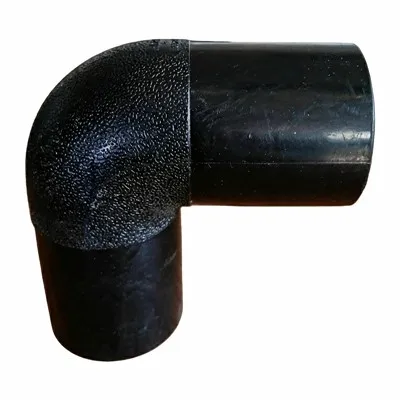
First, let’s ground this in what makes ASTM IPS Inch Butt Fusion Fittings unique—because maintenance has to start with understanding the material and standard they’re built to. ASTM IPS (Inch Pipe Size) standards define the dimensional tolerances, material properties, and fusion requirements for fittings fabricated from high-density polyethylene (HDPE), polypropylene (PP), or rarely, acrylonitrile butadiene styrene (ABS) for specific applications. Unlike metric fittings, IPS sizes are measured in inches, with common sizes ranging from ½ inch to 48 inches, each engineered to match the pressure ratings of corresponding IPS pipe. The butt fusion process itself fuses two ends of a fitting (e.g., an elbow, tee, reducer, or cap) to pipe via controlled heat and pressure, creating a joint that’s stronger than the pipe or fitting material itself. That strength is only as good as the joint and the ongoing care the fitting receives.
The first, and most critical, maintenance step is pre-installation inspection—because a small flaw found before fusion saves you from a catastrophic failure later. As a supplier, I’ve had customers return fittings that looked perfect on the shelf, only to discover hidden defects when they cut into the material for fusion. ASTM D2513, the standard that covers polyethylene (PE) pipe and fittings for pressure piping systems, outlines the minimum criteria for incoming inspection, but many of my clients skip these routine checks. Here’s what you need to do:
- Visual Inspection for Surface Defects: Run your hands along every fitting’s surface. Look for scratches deeper than 10% of the wall thickness, which is a threshold from ASTM D2513 that signals structural weakness. Avoid fittings with indentations, bubbles, or discoloration—these are signs of improper manufacturing (e.g., incorrect cooling during extrusion) or damage during storage. For example, a scratch on a 6-inch IPS Schedule 80 HDPE elbow might not seem like a big deal, but when the system carries 150 PSI of water pressure, that scratch becomes a stress riser that can propagate into a crack over time.
- Dimensional Verification: IPS fittings must match the IPS pipe’s outer diameter (OD) and wall thickness. Even a 0.01-inch mismatch can throw off the butt fusion alignment, creating a weak joint. Use a micrometer or caliper to confirm that the fitting’s spigot end (the part that fuses to pipe) matches the OD of your IPS pipe. As a supplier, we batch-test every fitting to ensure compliance with ASTM F1056, the standard for HDPE butt fusion fittings, but that doesn’t negate your own spot checks. Last year, we had a customer who installed 120 tees that they thought were 4-inch IPS, but a dimensional check revealed they were 3.98 inches—off enough to create 10 failed joints that required full replacement.
- Storage Condition Check: ASTM D2513 recommends storing HDPE fittings in a cool, dry area away from direct sunlight and chemicals like gasoline, oil, or chlorine. UV rays break down polyethylene over time, making it brittle. If your fittings are stored outside, check for brittleness by bending a small, scrap piece: if it cracks instead of flexing, it’s too far gone to use. Chemical exposure is even more insidious—even a few hours of contact with diesel can weaken the fusion surface, so avoid storing fittings near construction equipment or chemical drums.
Once your fittings are installed and fused to pipe, the maintenance shifts to two key areas: joint integrity and long-term material condition. This is where many operators go wrong—they treat butt fusion joints as permanent, but they’re susceptible to degradation from external and internal factors.
For joint integrity, routine testing is non-negotiable, especially for systems in high-stakes environments like water treatment plants or industrial chemical lines. ASTM F1925, the standard for field fusion testing of PE pipe and fittings, outlines three primary methods, each suited for different applications:
- Visual Joint Inspection: After every fusion, check the “bead” that forms at the joint. A good butt fusion bead is uniform, symmetrical, and free of cracks, cold laps (areas where the materials didn’t fully melt), or voids. For ASTM IPS fittings, the bead should extend equally around the circumference of the joint, with a thickness equal to approximately 10% of the pipe’s wall thickness. If the bead is lopsided, that means the fusion pressure was uneven, and the joint is at risk.
- Non-Destructive Testing (NDT) for Critical Systems: For systems carrying potable water or hazardous chemicals, use ultrasonic testing (UT) or pressure testing to confirm joint strength. UT uses sound waves to detect hidden voids inside the joint—ASTM F2619 provides guidelines for UT testing of PE butt fusion joints. Pressure testing involves pressurizing the system to 1.5 times the maximum operating pressure and holding it for 15 minutes; a drop in pressure of more than 5% signals a leak or weak joint. As a supplier, I recommend quarterly pressure tests for high-pressure systems, and semi-annual tests for low-pressure water lines.
- Repair of Minor Joint Defects: Small cracks or beads that are slightly off can often be repaired without replacing the entire fitting. For surface cracks less than ½ inch long and deeper than 10% of the wall thickness, use a hot air welder to fuse a patch of matching HDPE material over the crack. Never leave a small crack unaddressed—HDPE is ductile, meaning it flexes under pressure, so a tiny crack can grow exponentially over years of thermal expansion and contraction.
Beyond joints, the long-term maintenance of the ASTM IPS fitting material itself depends on controlling the external and internal factors that cause degradation. HDPE and PP fittings are durable, but they’re not indestructible. Here’s what to track:
- Temperature Fluctuations: Most ASTM IPS fittings are rated for continuous use between -40°F and 180°F, but repeated extreme temperatures can shorten their lifespan. For systems that experience frequent cold snaps (below 20°F) or high heat (above 150°F), inspect fittings twice a year for brittleness or warping. For example, a fitting in a process piping system that regularly runs at 160°F may develop surface cracks after 5 years, compared to 20 years for a fitting in a room-temperature water line. To mitigate this, insulate buried fittings in cold climates, or use heat-resistant grade PP fittings for high-temperature applications, which are rated up to 220°F per ASTM D3222.
- Chemical Exposure: If your system carries chemicals other than pure water, check the fitting’s compatibility with the fluid. ASTM D2513 includes a chemical resistance guide, but when in doubt, test a small sample of the fitting material with the fluid before full installation. Chemicals like strong acids (pH <4) or bases (pH >10) can corrode polyethylene over time, leading to swelling or cracking. If you detect discoloration or softening on the fitting surface, flush the system with a neutralizing agent and inspect adjacent fittings for signs of damage.
- Buried Fittings Specific Care: For ASTM IPS fittings installed underground, soil condition is a major factor. Avoid fittings in soils with high salt content (e.g., near coastal areas or road de-icing zones), as salt accelerates corrosion of any metal components (like threaded adapters) and can degrade HDPE over time. Inspect buried fittings every 3 years by excavating a small section of the pipe around the fitting to check for soil-induced abrasion. If the pipe or fitting is abraded, cover it with a protective sleeve or backfill with sand instead of rocky soil to reduce friction.
As someone who’s worked with these fittings for decades, I can tell you that the most common mistake I see customers make is waiting for a failure to perform maintenance. A few proactive steps add up to years of extended fitting life and avoid the cost of emergency repairs. For example, last year, one of our municipal clients missed a scheduled inspection, leading to a tee failure that flooded a parking lot, requiring $12,000 in repairs and 3 days of downtime. A $500 pre-installation inspection and semi-annual pressure test would have prevented that entirely.
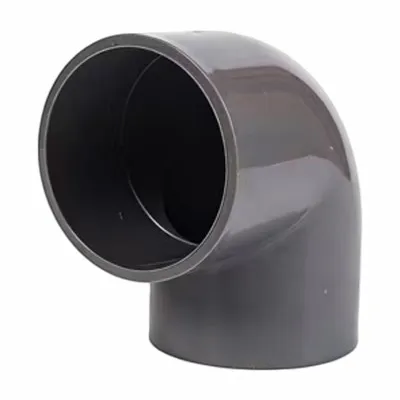
If you’re responsible for maintaining ASTM IPS Inch Butt Fusion Fittings—or if you’re looking for high-quality, ASTM-compliant fittings to install in your next project—we’re here to help. Our team of experts has decades of experience working with these fittings, and we can provide guidance on inspection schedules, material compatibility, and repair protocols tailored to your specific application. Whether you’re updating an existing system or planning a new installation, we’re ready to answer your questions and support your project from sourcing to long-term maintenance. Reach out to our team to discuss your needs, and let’s ensure your piping system runs reliably for years to come.
PPR Fittings References
ASTM D2513, Standard Specification for Polyethylene (PE) Pipe and Fittings for Pressure Piping
ASTM F1056, Standard Specification for Fabricated Fittings of Polyethylene (PE) for Butt Fusion Jointing
ASTM F1925, Standard Practice for Field Fusion Testing of Polyethylene (PE) Pipe and Fittings
ASTM F2619, Standard Practice for Ultrasonic Testing of Butt Fusion Joints in Polyethylene (PE) Pipe and Fittings
ASTM D3222, Standard Specification for Polypropylene (PP) Plastics Molding and Extrusion Materials
Qingdao Polyfusion Machinery Co., Ltd.
As one of the most professional ASTM IPS inch butt fusion fittings manufacturers and suppliers in China, we have world-leading production equipment and strong manufacturing capabilities. Please feel free to buy bulk high quality ASTM IPS inch butt fusion fittings from our factory.
Address: Chengyang Industry Zone, Chengyang, Qingdao, Shandong, China
E-mail: export01@qdpolyfusion.com
WebSite: https://www.polyfusionfittings.com/
