If you’ve spent any time specifying or maintaining industrial ventilation equipment, you’ve likely crossed paths with the 4-72 centrifugal fan. It’s a workhorse model used across factories, warehouses, commercial kitchens, and manufacturing facilities for everything from exhaust fume removal to product drying and general air circulation. But one question pops up more than any other when customers first reach out: Is a 4-72 centrifugal fan belt driven? 4‑72 Centrifugal Fan
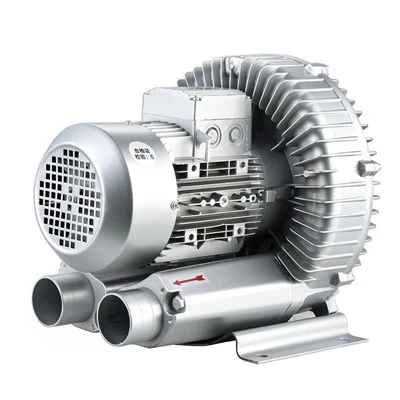
As someone who’s worked with this exact fan model for over a decade—first as an applications engineer, now as a supplier—I get why this is such a common, and critical, question. The drive type (belt-driven vs. direct-driven) isn’t just a technical detail; it impacts performance, efficiency, maintenance costs, and even how well the fan fits your specific application. In this post, I’ll break down exactly what the 4-72 line is, the two drive types it comes in, when each makes sense, and what to ask for when you’re sourcing one of these fans.
First, let’s get one thing straight: The 4-72 isn’t a single, one-size-fits-all fan. It’s a standardized series of centrifugal fans developed in the mid-20th century, originally designed in China but now a global staple for its reliable, high-efficiency air movement. The “4” refers to its pressure coefficient (a measure of how much static pressure the fan can generate), and the “72” is part of its aerodynamic blade design classification, optimized for both airflow and energy efficiency. The series comes in a range of sizes—from small 1.1kW units for light commercial use to 75kW+ heavy-duty models for large industrial operations—and it’s exactly that range that makes the drive type question so important.
So, back to the core question. The short answer is: It can be. The 4-72 centrifugal fan line is manufactured in both belt-driven and direct-driven configurations. But most heavy-duty, high-static-pressure 4-72 fans for industrial use are belt-driven, while smaller, lower-static models for light commercial or residential-adjacent applications are often direct-driven. Let’s dive into what that actually means, and why the difference matters for your project.
Belt-driven 4-72 fans have a separate motor mounted from the fan housing, connected to the fan’s impeller shaft via two pulleys and a rubber V-belt. This setup creates a flexible drive system that lets you adjust the fan’s operating speed by simply swapping out pulleys. For example, if you need more airflow for a dusty warehouse or higher static pressure to push air through a long duct run, you can crank up the impeller speed without replacing the entire motor or fan. That’s a huge advantage over direct-driven fans, where the impeller is mounted directly to the motor shaft and speed is fixed (or can only be adjusted via a variable frequency drive, which adds cost).
That adjustability is why belt-driven 4-72 fans are the go-to for most industrial applications. Let’s say you’re equipping a metal stamping plant: you need to pull hot, oily fumes from the production line through a 50-foot duct system, and static pressure will be high. A belt-driven fan lets you tune the impeller speed to exactly match the required airflow, not the generic speed of a direct-drive motor. Belt drives also absorb minor shocks or misalignment in the system, which is common in facilities with uneven loads or frequent start-stop cycles. That flexibility also makes belt-driven units easier to repair: if a belt wears out, you just swap it for a $20 part, rather than rebuilding the entire motor-impeller assembly like you would with a direct-drive model.
But that flexibility comes with tradeoffs. Belt-driven systems have more moving parts than direct-drive fans, which means slightly higher long-term maintenance. You have to inspect belts monthly for wear or stretching, replace them every 1-3 years depending on use, and occasionally adjust pulley tension to prevent slippage. Also, there’s a small amount of energy loss (usually 2-5%) from the belt and pulley friction, compared to the almost 95% efficiency of direct-drive systems. For applications where speed never needs to change and maintenance access is limited, direct-drive 4-72 fans make sense.
Direct-driven 4-72 fans are simpler, more compact, and require less routine upkeep. They’re ideal for small-scale applications: a bakery needing to exhaust kitchen hood air, a small warehouse for temperature control, or a greenhouse for fresh air circulation. The impeller is bolted directly to the motor shaft, so there’s no belt to replace, and the unit is quieter because there’s less vibration from a separate drive system. Their fixed speed also means you don’t have to worry about tuning it to your duct system, as long as the system is sized for the fan’s rated airflow at that speed.
Here’s the thing most buyers don’t know when they start searching for a 4-72 centrifugal fan: not all suppliers are transparent about the drive type upfront. Some might only list the fan’s airflow and pressure ratings, leaving you to find out it’s direct-driven after you’ve already purchased it—just to realize it can’t handle your high-static duct run. As someone who works with customers every week, my best advice is to ask three specific questions before buying: First, what’s the static pressure of your duct system, and how much airflow do you need at that pressure? Second, do you anticipate needing to adjust the fan’s speed in the future, either as your operation changes or if you add to your ductwork? Third, how much maintenance access do you have around the fan’s planned location?
Let’s use real examples to make this concrete. A customer recently reached out about a 4-72 fan for a 10,000 sq ft furniture factory, where they needed to pull sawdust and wood dust from multiple cutting machines. Their duct system was 80 feet long with multiple bends, so static pressure was around 1.2 kPa. A direct-drive 4-72 fan would only deliver 80% of its rated airflow at that pressure, because it’s fixed at a lower speed to avoid overheating the motor. A belt-driven unit let us adjust the pulley to crank the impeller speed up, delivering exactly the airflow they needed to keep the shop safe and meet OSHA dust regulations.
Another customer, a small coffee roaster with a 2,000 sq ft roasting facility, needed a fan to exhaust fumes from their roaster through a short duct. They didn’t need to adjust airflow, and they had limited space in their equipment bay. A direct-drive 4-72 fan was perfect here—it was quieter, more compact, and required almost no maintenance, which fit their needs better than a larger belt-driven unit.
Now, let’s clear up a common misconception: some people think belt-driven fans are always less efficient than direct-driven ones, but that’s only true if they’re poorly maintained. A properly tensioned belt and well-matched pulleys can be over 90% efficient, which is almost on par with direct-drive units. The key is working with a supplier who sizes the drive correctly for your application, not just selling you the cheapest unit off the shelf.
If you’re still not sure which drive type is right for your 4-72 centrifugal fan, here’s a quick decision guide I’ve refined over the years:
- Choose belt-driven if: Your duct run is over 50 feet (high static pressure), you need to adjust airflow later, or you’re installing the fan for heavy industrial use (dust, fumes, high temperatures).
- Choose direct-driven if: Your duct run is under 50 feet, you don’t need to adjust speed, and you’re using the fan for light commercial or low-load applications.
At the end of the day, the 4-72 line is designed to be versatile, and that’s why it’s lasted so long in the industrial space. But unlocking that versatility means getting the right drive type for your specific use case. I’ve seen too many customers buy a generic 4-72 fan, only to have it underperform because they picked the wrong drive. Don’t let that be you.

If you’re ready to source a 4-72 centrifugal fan, or if you want help figuring out which drive type is right for your project, don’t hesitate to reach out for a no-obligation consultation. We’ll walk through your application details, help you size the fan correctly, and make sure you get a unit that’s efficient, reliable, and tailored to your needs.
Single Stage Regenerative Blowers References
- ASHRAE. (2021). HVAC Applications Handbook: Fans. American Society of Heating, Refrigerating and Air-Conditioning Engineers.
- Li, Y. et al. (2019). Aerodynamic Performance Optimization of 4-72 Centrifugal Fan Impellers. Journal of Mechanical Engineering, Vol. 55, No. 12, pp. 145-152.
- Industrial Ventilation: A Manual of Recommended Practice. (2022). American Conference of Governmental Industrial Hygienists (ACGIH).
- Fan and Blower Application Guide. (2020). Air Movement and Control Association International (AMCA).
Taizhou Yijia Electromechanical Co., Ltd.
As one of the most professional 4‑72 centrifugal fan manufacturers and suppliers in China, we also support customized service. Please rest assured to buy high quality 4‑72 centrifugal fan in stock here from our factory. If you have any enquiry about cooperation, please feel free to email us.
Address: No. 47, Jinxing First District, Jintang Village, Jinqing Town, Luqiao District, Taizhou City, Zhejiang Province
E-mail: 826339968@qq.com
WebSite: https://www.yijiablower.com/
