Hey everyone, if you’ve ever spent time around industrial machinery, construction equipment, or even big automated manufacturing lines, you’ve probably seen hydraulic linear actuators in action—even if you didn’t know their name. I’m [just going to keep it real here, no fancy company name], and I’ve been selling these bad boys for over a decade, and let me tell you, they’re often the unsung heroes behind almost every heavy-lifting or precise movement task you can think of. A lot of people ask me lately why we keep recommending hydraulic actuators over, say, electric or pneumatic ones, especially when new tech pops up every month. So today, I’m breaking down the real, practical advantages that make hydraulic linear actuators not just a good pick, but sometimes the only pick—no fluff, just what I’ve seen work for customers over the years. Hydraulic Linear Actuator
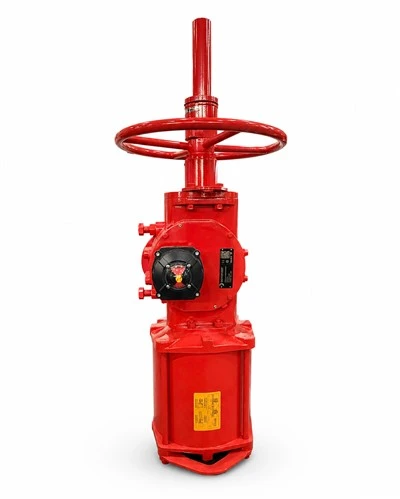
First off, let’s talk about brute force, because that’s the big one no one argues about. If you’ve ever tried pushing a 10,000-pound press brake into shape, or lifting a whole segment of a construction crane into place, you know you need more oomph than a regular electric motor can deliver. Pneumatic systems? They’re fun for small stuff, but they peter out once you need more than a couple thousand pounds of force. Electric linear actuators? Sure, you can get high-force electric ones, but they get bulky, hot, and expensive when you push them past, like, 15,000 pounds max. Hydraulic ones? We’re talking custom setups that can push, pull, or lift hundreds of thousands of pounds—no problem. Last year, we hooked up a custom hydraulic actuator for a mining company that needed to adjust conveyor belt tension on a 200-foot-long line. The actuator had to pull tight enough to stop a half-ton rock from jamming the whole line, and it did it without straining even a little. Compare that to the electric setup they’d tried before, which burned out three motors in a week because it couldn’t handle the constant, heavy load. It’s not just about raw force, either—hydraulics deliver that force smoothly, not in jerks like pneumatics sometimes do, which is huge for delicate heavy lifting too.
Next up, precision under load—this is where people start to realize hydraulics aren’t just for big, clunky jobs. I used to think if you needed fine control, you went electric, right? But no, modern hydraulic actuators with proportional control valves can hold a position within a fraction of an inch, even when they’re under full load. Let’s use an example: a customer in the aerospace industry we work with builds custom tooling for holding airplane wing sections while they’re being drilled. They need the actuator to hold a 5,000-pound wing segment perfectly still at a 12-degree angle, with no drift, for 12 hours straight while the drill runs. An electric actuator would drift a little over time, especially when the motor heats up, but hydraulic ones? Because they work on fluid pressure, once you set the pressure, the actuator doesn’t move—end of story. That precision also makes them great for things like agricultural equipment, like adjusting the position of a combine harvester’s header to match uneven crop rows. If the header is even a quarter-inch off, you’re wasting grain, and our hydraulic actuators let operators dial that in exactly where it needs to be, no guesswork.
Then there’s the durability part, and I’m not talking about “it lasts a year”—I’m talking about 10+ years in harsh conditions. Let’s be real: a lot of hydraulic actuator jobs are in places where machines get rained on, covered in dust, or run 24/7 without a break. I had a customer in oil and gas who uses our actuators on wellhead control panels in the middle of the desert—110-degree heat during the day, freezing cold at night, sandstorms that coat everything. They replaced their electric actuators every 18 months because the motors’ windings would burn out from heat or get clogged with sand. Our hydraulic ones? They’ve been running strong for 7 years now, no major repairs. Why? Because the working parts of a hydraulic actuator are simpler in a lot of ways—no complex motor windings, no fragile gear trains that strip under heavy load. The seals take a beating, yeah, but they’re replaceable, and even when seals wear, they just leak a little fluid (we use eco-friendly hydraulic fluid now, by the way) instead of the whole actuator seizing up like an electric one would. And unlike pneumatic systems, which need constant air compression and can suck in moisture that causes rust, hydraulics are sealed systems (if you spec them right) that keep contamination out way better.
Wait, let’s not sleep on the flexibility of design either. When I say design, I mean being able to build an actuator that fits whatever weird space a customer has, not forcing them to adjust their whole machine around a one-size-fits-all part. For example, a customer in the material handling industry needed an actuator that could fit into a narrow, 6-inch gap between two metal beams in a warehouse crane. They tried electric actuators, but all the high-force ones were too long. With hydraulic, we can make custom sized cylinders, mount them sideways, or even integrate them into existing machine frames without a ton of modification. Also, hydraulic systems are modular—if a customer needs to add more force later, they don’t have to swap out the whole actuator; they just adjust the pressure from the power unit. Compare that to electric, where you have to replace the entire motor and gear assembly. That flexibility is why we work with everything from small custom machine shops to big construction companies that have unique jobs every week.
Oh, and energy efficiency—wait, I know what some of you are thinking: “Hydraulics use more energy, right?” No, not when you spec them for the job. Let’s clear that up. People often confuse old hydraulic systems (the ones that run constantly just to keep pressure up) with modern ones, which have variable displacement pumps that only use energy when the actuator is moving. If your machine only uses the actuator 10% of the time, a modern hydraulic setup might be more efficient than an electric one that’s running its motor the whole time to be ready for use. Also, when you’re lifting heavy loads, hydraulic systems can actually recover energy. For example, when you lower a heavy object, the fluid can be routed back to the power unit, reducing how much energy you need to put in. A lot of our construction customers tell us their fuel costs went down 20-30% after switching from electric to hydraulic actuators on their equipment, because they’re not wasting energy on idle motors. That’s a big deal these days, when everyone’s trying to cut operational costs.
Now, I should be real here—hydraulic actuators aren’t perfect. They do need a little maintenance, like checking fluid levels and replacing seals every few years. And if you have a really small, low-force job (like adjusting a desk chair or a small conveyor), electric or pneumatic is probably cheaper and simpler. But if you’re doing heavy lifting, need precision under load, or working in harsh conditions, the advantages way outweigh the small maintenance stuff.
At the end of the day, what I love most about hydraulic linear actuators is that they solve problems no other actuator can. I’ve seen customers struggle for months with broken electric actuators on custom jobs, and we’ve come in with a hydraulic solution that fixed it within a week. That’s why this is what I sell, and what I’ll keep selling—because I’m not just pushing a product, I’m giving a solution that works when nothing else will.

If you’re tired of actuators that burn out, drift, or can’t handle your workload, hit me up to chat about your project. No sales pitch spam, no hidden fees, just me giving you the real scoop on what will work for your needs.
Hydraulic Actuator References:
- Hydraulic Control Systems: Design and Analysis, S. Todd, 2019
- Linear Actuator Technology and Application, Industrial Press, 2021
- Operational Efficiency of Heavy-Duty Hydraulic Actuator Systems, Journal of Manufacturing Systems, Vol. 45, 2017
Zhejiang Bigtork Valve Automation Co., Ltd.
Zhejiang Bigtork Valve Automation Co., Ltd. is one of the leading hydraulic linear actuator manufacturers and suppliers in China. We warmly welcome you to buy customized hydraulic linear actuator at competitive price from our factory. Contact us for more details.
Address: 998 Yuanqu Avenue, Anfeng Industrial Zone, Oubei, Yongjia, Zhejiang, China
E-mail: sales@bigtork.com
WebSite: https://www.bigtork.com/
