If you’ve ever stood on a precision machine tool, watched a linear robot pick and place tiny electronics components, or seen a packaging line fold and seal a box with flawless consistency, you’ve relied on a ball screw linear module. As a supplier that’s built these parts for 12 years, I hear the same question from design engineers, plant maintenance managers, and hobbyists alike: “How long will this thing actually last under load?” Ball Screw Linear Modules

It’s a fair question. A ball screw module isn’t a cheap part—slap it into a custom automation setup, and you’re looking at a sizable chunk of your machine’s total cost. No one wants to replace a core component six months after installation because you miscalculated its lifespan. The short answer is: it depends. The long answer, which I’ve walked engineers through a hundred times in our conference room, is a mix of engineering science, real-world field data, and how you treat the module once it’s running.
Let’s start with the foundation. A ball screw linear module works on a simple rolling principle. The screw is threaded, and a set of recirculating ball bearings ride between the screw and the nut, converting rotational motion from a motor into linear movement. Those balls are what make it efficient and long-lasting—instead of sliding against each other like in a lead screw, they roll, which reduces friction drastically. But rolling contact means you’re dealing with fatigue over time, just like a car wheel bearing that spins for tens of thousands of miles before it wears. That fatigue is the primary factor that determines service life, not just time in operation.
The official industry standard for calculating that life is ISO 14728, which most reputable module suppliers like us use as our baseline. ISO 14728 defines “basic dynamic load rating” as the maximum load a module can handle for one million revolutions of the screw, with a 90% survival rate. That’s key: the 90% number isn’t a guess—it’s a statistical threshold that accounts for natural variation in material quality, manufacturing tolerances, and operating conditions. If two identical modules run side by side, one might last 10 million revolutions, the other 15, and the basic life is the point where 9 out of 10 will still be running without failure.
But here’s the catch: basic life is a theoretical number, not a promise of how long your module will last. That’s where real-world load comes in. Let’s say you have two identical modules, both rated for a basic dynamic load of 500 kg. If you load the first one to 250 kg (half its rated capacity), its service life will be 16 times longer than the basic life. Load it to 400 kg, and its life drops to roughly one-fifth of the basic life. That’s the load-life relationship, a power law that’s consistent across all ball screw components. It’s why we spend so much time during the quoting process asking for not just the maximum load, but the average load the module will see over its cycle. A lot of engineers only give us the peak load during a pick-and-place movement, but the average load over the entire hour, day, or shift is what really drives wear.
I remember a customer a few years back who told us his module was “failing after two months” on a packaging line. We sent a service tech out, and he pulled the module to test it in our lab. The basic rating was 500 kg, but the customer was running it at 450 kg full time—no breaks, no downtime. He had given us the peak load, but because the machine ran the same cycle 24/7, his average load was almost equal to the peak. His module’s life was way lower than the basic rating, because he was operating it at near-max load constantly. We adjusted the application, showed him how to lighten the load slightly by optimizing his gripper design, and he’s been a repeat customer ever since. That’s the kind of on-the-ground problem-solving we do, not just selling parts and walking away.
Load isn’t just about mass, either. There’s dynamic load, like acceleration and deceleration forces, that you can’t ignore. If your module is moving a 100 kg payload and accelerating at 1 G, that adds another 100 kg of dynamic load on top of the payload weight. Suddenly, your total load is double what you thought, and your service life is cut in half. We always ask for acceleration and deceleration rates, as well as the travel speed, to calculate the correct dynamic load. Even something as simple as the direction of the load matters: a module lifting a load vertically will see different forces than one moving horizontally the same payload.
Then there are the factors that no basic calculation can account for: environment and maintenance. We’ve seen modules in food processing plants last 10 years running under 300 kg load, even with occasional washdowns, and modules in steel mills fail in 18 months because of constant dust and heat. Dust is the enemy of a ball screw—if it gets into the nut or the screw thread, it acts like abrasive grit, wearing down the balls and the raceway. That’s why sealing matters. Most of our modules come with standard rubber wipers on the nut, but for dirty environments, we offer metal lip seals and even bellow covers that protect the entire rail and screw. One automotive parts customer of ours runs their modules on a stamping line, where metal shavings are everywhere. They upgraded to our heavy-duty metal seals and bellow covers, and their failure rate dropped by 80% overnight.
Lubrication is another big one. A ball screw module needs lubrication to keep the balls rolling smoothly, reduce friction, and prevent corrosion. Too little lubrication, and you get metal-on-metal contact, leading to premature wear. Too much, and you’ll have heat buildup and contamination. The type of lubricant matters, too—for high-speed applications, we recommend a light grease that doesn’t cause drag, while for heavy-load, low-speed applications, a thicker, more adhesive grease works better. We include a lubrication schedule with every module, but I can’t tell you how many customers ignore it and call us when their module seizes up. Last year, a 3D printing company called us saying their extruder module had locked up. We went out, and found they hadn’t lubricated it in two years. The grease had turned hard, like wax, and the balls had all worn down to nothing. A 10-minute lubrication check every month would have saved them thousands in downtime and part replacement.
Now, let’s talk about real-world service life numbers. For a standard module running in a clean, controlled environment—like an electronics assembly line, where average load is 30% of the basic rating, and speed is moderate—we see modules easily hit 20 to 30 million revolutions before any significant wear. Translated to time, that’s roughly 5 to 10 years of 24/7 operation, or 15 to 20 years of two-shift operation, depending on travel length. For modules running under near-max load, in harsh environments, without proper maintenance, that number drops to 2 to 5 million revolutions, or less than two years of heavy use.
We also offer a “calculated service life” tool on our website, but I always tell engineers not to treat that number as gospel. It’s a starting point. We build our modules with premium materials—high-grade chrome steel for the screw and nut, precision-ground threads, instead of rolled threads that are less accurate and wear faster. That’s part of why our modules cost a little more than the off-brand ones, but when you factor in downtime costs, replacement parts, and lost production, they pay for themselves in the long run. One customer we work with had a competitor’s module on their machine that failed every 18 months. We swapped it out for ours, and it’s still running strong after 5 years. When I checked in with their maintenance manager last quarter, he said “I haven’t replaced a single linear part in two years—you guys saved my budget.”
Another common misconception: service life is only about the ball screw. It’s not. The linear rail, the motor, the bearings—all parts of the module work together. A bad linear rail can wear out the screw faster, just like a worn nut can damage the rail. That’s why we design our modules as a single integrated unit, not just a screw and a rail bolted together. We source every component from the same trusted suppliers, and assemble them in-house in our ISO-certified factory, so every module is tested before it leaves our dock. We test each unit for accuracy, load capacity, and smooth operation, so you don’t get a part that fails because of a misaligned rail or a nut made from inferior steel.
So, what does all this mean for you? If you’re designing a new automation setup, don’t just pick the cheapest ball screw module you can find. Give us as much detail as you can: not just the maximum load, but the average load over your cycle, acceleration and deceleration rates, travel speed, operating environment, and maintenance schedule. We’ll run the calculations with you, adjust for any harsh conditions, and recommend the right seals, lubrication, and module size to make sure it lasts as long as you need it to.
If you’re having issues with a existing module, don’t wait until it fails. Send us the details of your application, and our engineering team can help you diagnose the problem—whether it’s overloading, poor lubrication, or a bad environment—and recommend a solution that works for your budget.
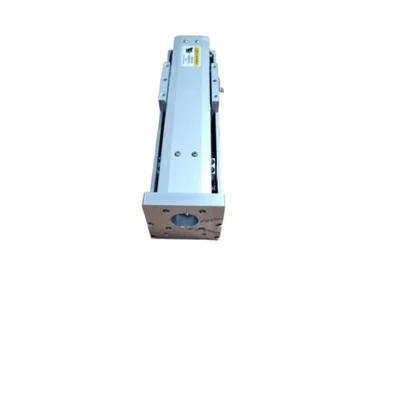
At the end of the day, a ball screw linear module’s service life is a partnership between the part, the installation, and how you treat it. We build the highest quality modules we can, but we also want to help you make them work for your specific needs. If you’re ready to talk about your next project, or need help troubleshooting an existing one, reach out to our team. We’re here to make sure your automation runs smoothly, without the hassle of unexpected breakdowns, for years to come.
Panasonic Sensor References:
- International Organization for Standardization. (2015). ISO 14728: Rolling bearings – Linear motion rolling bearings – Part 1: Dynamic load ratings and rating life.
- Jones, M. H. (2020). Linear Motion Systems: Design, Application, and Maintenance. Industrial Press.
- Kalpakjian, S., & Schmid, S. R. (2019). Manufacturing Processes for Engineering Materials (7th ed.). Pearson.
- Thomson, R. (2018). “Understanding Load-Life Relationships in Ball Screw Actuators.” Motion System Design Magazine.
Yangning (Xiamen) Intelligent Technology Co., Ltd.
With abundant experience, we are one of the most professional ball screw linear modules manufacturers in China. As we have world-leading production equipment and strong manufacturing capabilities, we warmly welcome you to buy bulk advanced ball screw linear modules from our factory. Customized orders are welcome.
Address: Room 307-2, No.15 Duiying Road, Software Park Phase III, Torch Hi-Tech Zone, Xiamen, Fujian, China
E-mail: mia@ynautos.com
WebSite: https://www.ynautos.com/
