If you’ve ever browsed optical frames—whether for prescription glasses, sunglasses, or blue light-blocking readers—you’ve likely held a product that started its life in an injection moulding machine. As a supplier of these machines, I get questions all the time from emerging optical brands and small-scale manufacturers: “Should I invest in a single-cavity or multi-cavity machine?” It’s not a trivial choice. Pick the wrong one, and you’ll waste time, blow budgets, and struggle to keep up with demand. Pick the right one, and you’ll cut production costs, meet tight lead times, and scale your business without headaches. Let’s break this down, grounded in what I see every day working with optical manufacturers—no jargon for jargon’s sake, just real, practical science and insight. Optical Frame Injection Moulding Machine
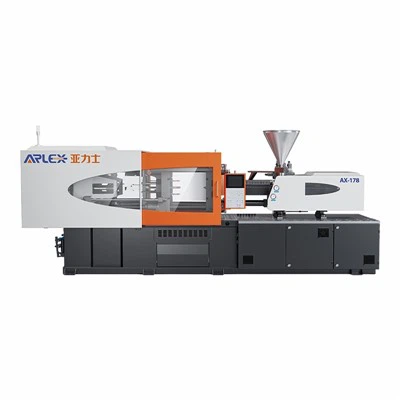
First, let’s start with the basics, because not everyone behind the counter or in a startup back office knows the core of how these machines work. An injection moulding machine for optical frames melts thermoplastic resin (usually TR-90, a lightweight, flexible material that’s perfect for eyewear, or acetate, the classic choice for high-end frames) and injects it into a mould cavity. That cavity is the hollow space where the frame takes its shape—lens rims, nose pads, bridge, all of it. A single-cavity machine has just one of these mould spaces, while a multi-cavity machine has two, four, six, or even more, all arranged in a single mould tool. The difference isn’t just how many frames you make per cycle—it ripples through every part of your operation: cycle time, material waste, precision, and overall cost.
Let’s talk about cycle time first, because that’s the first metric new manufacturers track. On a single-cavity machine, a full cycle—from injection to cooling to ejection—takes between 60 and 90 seconds for most standard optical frames. That means, at full speed, you’re making one frame every minute and a half. A multi-cavity machine? Let’s say a 4-cavity model, which is the most common for mid-sized brands. The cycle time is almost identical: 55 to 85 seconds, because the cooling phase, which is the longest part of the cycle, depends on how thick the frame walls are, not the number of cavities. Wait, that means you’re getting four frames for almost the same time as one? That’s the big win for multi-cavity, but it’s not all upside.
Precision is non-negotiable in optical frames. A frame has to fit perfectly on a lens edger, line up straight when mounted, and be comfortable for the wearer. Even a 0.1mm difference in lens rim diameter can mean a frame gets rejected. On a single-cavity mould, you have one set of mould halves, one injection gate, and one cooling channel layout. This makes it easier to maintain consistent pressure across the entire cavity, because there’s only one space to regulate. On a multi-cavity mould, the challenge is balancing material flow across all cavities. If one cavity is closer to the injection nozzle, resin will reach it faster, while a cavity on the opposite side might have a slight delay. That can lead to slight size variations between frames from different cavities. Now, modern multi-cavity machines have built-in valve gates and dynamic pressure controls that mitigate this, but it’s not zero risk. I’ve seen small brands try to jump to 8-cavity machines too early, and end up with 10-15% of frames rejected for size inconsistencies, which wipes out the cost savings from faster production.
Material waste is another big differentiator. Single-cavity machines produce far less scrap by default. Why? Because you only have one runner system—the channels that carry resin from the nozzle to the cavity. Runners are the part of the mould that gets melted but isn’t part of the final frame; you can grind it up and reuse it, but it’s still waste that costs you resin. A 4-cavity mould has four times the runner length of a single-cavity, so more scrap per cycle. For optical manufacturers working with acetate, which is a more expensive, premium resin, this adds up fast. TR-90 is cheaper, but even then, 10 extra grams of scrap per cycle, multiplied by 10,000 cycles a month, is thousands of dollars a year in wasted material. That said, as I mentioned earlier, modern multi-cavity moulds have hot runner systems, which heat the runners to keep resin molten, so you don’t have to solidify and grind them. Hot runners cut runner waste by 80% or more, but they add 20-30% to the cost of the mould itself. So it’s a trade-off: higher upfront mould cost for less long-term waste.
Now let’s talk about scalability, which is where a lot of new brands get stuck. If you’re just starting out, you might have a small batch order: 500 frames to test the market with local optometrists. A single-cavity machine is perfect here. You don’t need to invest in a larger machine, and you can adjust production runs easily. Need to change a frame design? The mould changeover for a single-cavity tool takes 15-20 minutes, because it’s just two halves. For a multi-cavity tool, changeover takes 45 minutes to an hour, because you have to align all four or six halves perfectly to keep cavity consistency. That’s a big deal if you’re switching between designs often. But if you scale up to 10,000 frames a month, a multi-cavity machine becomes way more efficient. Let’s do the math: a single-cavity machine running 720 cycles a day (24 hours, no downtime) makes 720 frames. A 4-cavity machine with the same cycle time makes 2,880 frames a day. That means you need three single-cavity machines to match the output of one 4-cavity multi-cavity machine. The cost? Three single-cavity machines cost 2-3 times as much as one 4-cavity machine, plus you need extra space, extra labour to run three machines, and extra maintenance. For established brands hitting consistent demand, multi-cavity is a no-brainer for that scale.
Wait, but what about quality control? Single-cavity machines simplify QC because every frame comes from the same mould, same conditions. If you get a bad batch, it’s easier to trace the cause—maybe the heater in the nozzle is failing, maybe the cooling time is off. With multi-cavity, you might have a single bad cavity that produces defective frames, and it’s harder to spot until you’ve already run a lot. That’s why many multi-cavity users set up a quick check every 500 frames from each cavity, but that adds to QC labour time. On the flip side, if a single-cavity machine goes down for maintenance, you lose all production. A multi-cavity machine can run 75% of its cavities if one fails, so you don’t have a full shutdown. That’s a big reliability factor for 24/7 production lines.
I’ve seen so many manufacturers make the mistake of thinking “more cavities = better.” Last year, a startup from Florida reached out to me looking for an 8-cavity machine. They had a $50,000 order from a big retail chain, but they’d only ever produced 1,000 frames total in a single-cavity machine. We talked them down to a 4-cavity machine. The first time they ran the 8-cavity, they had 22% scrap, because their team wasn’t experienced in balancing multi-cavity pressure, and the mould maker had skipped a few precision tweaks. With the 4-cavity, they got 2% scrap, hit their delivery date, and later moved to a 6-cavity machine when they had consistent monthly demand. That’s the sweet spot: start with what you need for your current order volume, not what you think you might need in two years.
Another point to consider: material type. If you’re working with acetate, which is prone to warping if cooling is uneven, multi-cavity can be tricky. The thicker runners in cold-runner multi-cavity moulds mean slower cooling for the runners, and if the frame cavities cool unevenly, you get warped rims or distorted bridges. Single-cavity moulds, with simpler, better-regulated cooling, are far more reliable for acetate. For TR-90, which is more flexible and forgiving, multi-cavity works great, as long as the cooling system is set up right.
Maintenance is another underdiscussed difference. Single-cavity machines have fewer moving parts, simpler mould tools, so maintenance is cheaper and faster. A routine check on a single-cavity machine takes 1-2 hours. A multi-cavity machine, especially with complex hot runners, takes 3-4 hours, and requires specialised technicians who know how to adjust cavity balance and hot runner temperature. For small teams, that means either downtime waiting for a specialist, or training your own staff—another cost to factor in.
Let’s wrap this up with a clear breakdown to help you decide. If you’re: a startup with less than 5,000 frames a month, testing designs, switching between styles often, working with premium acetate, or operating with a small team, a single-cavity machine is the right choice. It’s lower upfront cost, easier to learn, lower scrap, and more flexible. If you’re: a mid-sized brand with 5,000-20,000 frames a month, consistent demand, working with TR-90, and have a team experienced in moulding, a 4 or 6-cavity machine will give you the efficiency and cost savings you need. If you’re a large brand doing 20,000+ frames a month, a multi-cavity machine is non-negotiable—you can scale without adding more machines, keep labour costs low, and meet bulk order deadlines.
Every optical frame manufacturer’s journey is different, and there’s no one-size-fits-all answer. The worst thing you can do is overinvest in a machine that’s too big for your current needs, or skimp on a machine that will hold back your growth. If you’re not sure which option fits your production goals, don’t guess. Talk to a supplier who knows the optical industry, who can walk you through your current order volume, material choices, and long-term plans, and help you pick a machine that won’t just work today, but will grow with you tomorrow.
If you’re ready to explore your options for single-cavity or multi-cavity optical frame injection moulding machines, feel free to reach out for a consultation to discuss your specific production needs.
Injection Molding Auxiliary Equipment References:
- Rosato, D. V., & Rosato, M. G. (2004). Injection Molding Handbook. Springer.
- Williamson, J. (2021). Optical Fabrication and Manufacturing: Principles and Practices. CRC Press.
- plasticsengineering.com. (2022). "Multi-Cavity Molding: Balancing Flow and Precision." Society of Plastics Engineers.
- opticalgoods.com. (2023). "Choosing the Right Injection Molding Machine for Eyewear Production." Eyewear Industry Review.
Ningbo Yalishi (Arlex) Plastic Machinery Co., Ltd.
Address: No.63, Huangsu East Road, Industrial Zone, Dongqian Lake Tourist Resort, Ningbo, Zhejiang Province
E-mail: leo@arlex.cn
WebSite: https://www.arleximm.com/
