If you’ve ever walked into a space and felt a quiet, luminous energy wrap around you—whether it’s a sunlit office lobby, a cozy living room, or a sleek boutique—chances are crystal wall art was part of that feeling. As someone who’s spent the last seven years sourcing and crafting crystal wall pieces (and yes, I’m the one answering your questions when you email about custom designs), I get so many inquiries from people who love the look but have no idea what goes into making these pieces. Most think it’s just gluing rocks to wood, and while that’s part of it, there’s a whole science and craft behind choosing every material to make something that’s both beautiful and built to last. Let me break down exactly what we use at our studio when creating crystal wall art, and why each choice matters. Crystal Wall Art

First, the star of the show is, obviously, the crystal itself. But not all crystals are equal for wall art—we don’t just grab the first pretty chunk of amethyst or clear quartz we find. We’ve tested dozens of varieties over the years, and the ones that work best fall into two main categories: raw, unpolished points and polished facets. Raw points are perfect for that earthy, boho vibe; their jagged edges and natural inclusions (think the tiny white veins in rose quartz or the rusty rust spots in citrine) add texture and warmth. Polished facets, on the other hand, catch light like tiny prisms, making them ideal for spaces that need a little extra glow, like entryways or home offices.
We source our crystals from trusted small-scale miners across Brazil, Madagascar, and parts of the American Southwest, not only because their stones are high-quality but because we prioritize ethical sourcing—no mines that use exploitative labor or damage local ecosystems. When it comes to specific stones, clear quartz is a staple in every studio: it’s versatile, has a neutral clarity that works with almost any decor, and is durable enough to hang on a wall without chipping. Amethyst is another bestseller; its soft purple hue feels calming, and clusters of small amethyst points create a rich, layered look. We also use rose quartz for clients who want pieces that feel romantic or nurturing, and black tourmaline for spaces that need a grounding, protective energy—though I always warn new clients that black tourmaline is heavier than other stones, so we have to be extra careful with the backing.
The next most important material is the backing board, because this is what holds all the crystals in place, and it has to be strong enough to support the weight of heavy stones, withstand changes in humidity and temperature, and look seamless. A lot of amateur crafters use thin plywood, and while that works for small, light pieces, we never do that. We use two types of backing, depending on the size and use case: medium-density fiberboard (MDF) that’s been sealed with a water-resistant primer, and 100% marine-grade plywood. Marine-grade plywood is our go-to for large wall art (anything over 2 feet wide) or pieces that will be hung in high-humidity spaces, like bathrooms or sunrooms. It’s resistant to warping and rot, even when exposed to steam or dampness, which means our pieces won’t sag or fall apart after a year of being in a steamy bathroom. For smaller, indoor-only pieces (like 12-inch accent pieces for shelves or small entry walls), we use sealed MDF—it’s lighter, so it’s easier to hang without a heavy-duty mount, and it has a smooth surface that makes the crystal points and backing look cohesive.
Once we have the backing, we need something to attach the crystals to it. This is a part of the process that many people overlook, but it’s one of the most crucial—if the adhesive isn’t strong enough, a crystal could fall off the wall, which is not only a hassle to fix but dangerous if it hits someone. We’ve gone through dozens of adhesives over the years, from super glue to craft epoxy, and the one we swear by is industrial-grade, clear epoxy resin. It’s strong enough to hold even our heaviest black tourmaline chunks, it dries clear so it doesn’t leave unsightly yellow or white marks around the crystal base, and it’s flexible enough to withstand minor shifts in temperature (like when a space’s heater kicks on in winter) without cracking. We also use small, stainless steel pins as a secondary support for larger crystals—we drill tiny holes in the backing, slide the pins into the holes, and attach the crystals to the pins with a little extra epoxy. It’s an extra step, but it means our wall art can last for decades, not just a couple of years.
For hanging the pieces, we use heavy-duty D-ring brackets. These are the metal loops that attach to the back of the backing, and they’re designed to support more weight than regular picture hooks. We place two D-rings on every piece, spaced evenly apart, so the weight of the crystal wall art is distributed evenly across the mount, which prevents it from tilting or pulling away from the wall. For larger pieces (over 4 feet wide), we add a third D-ring in the center to distribute the extra weight—we learned this the hard way when a 5-foot amethyst wall we made last year pulled away from the wall after six months because we only used two brackets. That mistake taught us to over-engineer the hanging hardware, and now every piece leaves our studio with enough brackets to support twice its total weight, which gives our clients peace of mind.
There are a few extra materials that make our crystal wall art stand out from the cheap ones you might find at big-box stores. For one, we sand and seal all the edges of the backing so they don’t have that rough, splintery look. Some manufacturers leave the edges of the plywood or MDF unfinished, but that’s a dead giveaway that a piece is low-quality, and it can chip or peel over time. We also use felt pads on the back of the D-ring brackets to protect the wall—no one wants a shiny metal bracket scratching their fresh paint, and felt prevents that. For pieces that have a more rustic, boho vibe, we sometimes add a thin layer of natural jute twine along the edges of the backing to give it a softer look, especially if the crystals are raw or unpolished.
Wait, I should also talk about what we don’t use. We never use hot glue—even though it’s easy and cheap. Hot glue melts in warm temperatures, so if a client hangs a piece with hot glue in a sunny room that gets hot during the day, crystals will start falling off within a few months. We also don’t use regular craft plywood, which warps easily in humidity, and we definitely don’t source crystals from vendors who use exploitative mining practices. This might make our pieces a little more expensive than some other options, but in the long run, it’s worth it—our clients tell us their pieces look just as good, if not better, years after they hang them.
I get it, if you’re new to buying crystal wall art, all these materials might feel overwhelming. You might be wondering, “What’s right for my space?” If you’re hanging a small piece in a dry living room, a polished clear quartz piece on sealed MDF with epoxy is perfect. If you’re putting a large piece in a bathroom, you’ll want marine-grade plywood and heavy-duty D-rings. Whatever your space, our team can walk you through every choice. We’ve been working with interior designers, homeowners, small business owners, and even gallery curators for years, and we know what works for every kind of space.
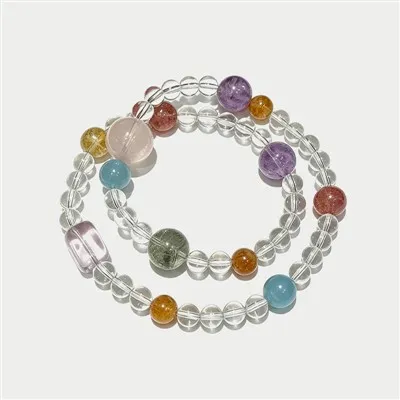
If you’re interested in bringing a custom crystal wall art piece to your home or business, feel free to reach out to our team to discuss your project, budget, and space needs. We can help you choose the right crystals, backing, and hardware that fits exactly what you’re looking for, no matter if you want a small accent piece or a statement wall for a commercial space.
Crystal Decor References:
- Crystallography: A Guide to Crystal Identification and Use, Crystal Science Press, 2019
- Adhesives for Structural Applications, Industrial Materials Association, 2021
- Marine Plywood: Properties and Applications, American Wood Council, 2020
- Ethical Sourcing of Gemstones, Global Mining Initiative, 2022
Shenyang Magic Life Co., Ltd.
As one of the most professional crystal wall art manufacturers and suppliers in China, we have world-leading production equipment and strong manufacturing capabilities. Please rest assured to wholesale bulk high quality crystal wall art from our factory. Also, custom service is available.
Address: No.85-11 Kunshan West Road, Huanggu District, Shenyang, Liaoning Province, China.
E-mail: jane@ziyuaqua.com
WebSite: https://www.ziyuaqua.com/
