Hey there,
If you’re reading this, you’re probably deep in the weeds with lab water specs, or tired of your ultra pure water (UPW) system feeling like a bottomless drain—especially when you hear conflicting stuff about how much it actually wastes. As a UPW system supplier who’s been in the game for over 15 years, I get it: nobody wants to blow their water bill on a piece of equipment that’s supposed to help your lab or manufacturing run smoother. Let’s cut the jargon, skip the fancy stats, and break this down like we’re hanging out at a coffee shop, no stuffy white coats required. Ultra Pure Water System
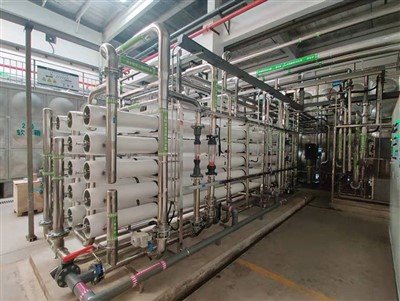
First, let’s clear up a common myth: UPW systems aren’t just wasting water for fun. They work on reverse osmosis (RO) and electrodeionization (EDI)—two technologies that need to flush out contaminants to keep the membrane and resin working. If you don’t flush those gunk out, your system dies fast, repairs get pricey, and your water quality tanks. But here’s the thing: old-school systems waste way more water than they have to, and that’s where most people get confused.
Let’s start with the real numbers. Back in the day, standard UPW setups had a “rejection rate” of 50-60%. That means for every 2 gallons of water you put in, only 1 became pure enough for use, and 1 went down the drain. So that’s a 50% waste rate, right? But that was for systems that ran 24/7, even when no one was using water—they were just keeping membranes moist and resins charged. Today’s modern UPW systems are way smarter. They have shutoff valves that cut water flow when there’s no demand, variable frequency drives (VFDs) that adjust pressure based on how much water you need, and even wastewater recycling loops that feed that “waste” water back into your building’s pre-treatment system (like feeding it into your tap water feed for the RO, not just dumping it).
Wait, so what’s the actual current average waste? If you have a well-maintained, modern system sized right for your lab or plant, waste rates are usually 15-25%. But hold on—this isn’t one-size-fits-all. If you’re running a small lab with 2-3 water taps, your waste might creep up to 30% because you’re not using enough water to hit the system’s optimal flow rate. If you’re a big pharmaceutical plant running 24/7 with recycling, you can get that waste down to under 10%. I’ve seen a semiconductor fab cut their water use for UPW by 70% in two years just by swapping their old RO membranes and adding a recycling loop. That’s not a trick—it’s good engineering.
Now, let’s talk about what “waste” even means here. A lot of people look at the drain line and think that’s all lost water, but some of that is required maintenance. For example, EDI units need a small “concentrate stream” to carry away ions that the resin pulls out—you can’t stop that without damaging the EDI. RO membranes need periodic flushes to prevent scale buildup from minerals in your feed water. If you try to block that flow, your membrane’s lifespan drops from 3-5 years to 1-2, and you’re spending way more on replacements than you saved on water. So it’s a balance: you don’t want to waste water, but you don’t want to pay twice as much in repairs either.
I’ve seen clients make two common mistakes that jack up their waste rates. First, buying a system that’s too big for their needs. A lot of folks see a 100 GPD (gallons per day) system on sale and jump on it, even if they only use 30 GPD. Big systems run at low flow rates, which makes them less efficient—they waste way more water just to keep the membranes from sitting still. Second, skipping regular maintenance. If you don’t change your pre-filters every 6 months, your RO membranes get clogged, so they have to push harder, which means more water goes down the drain to get the same pure water. Last year, a biotech client of mine had a 40% waste rate because their pre-filters were 2 years past due. We swapped the filters, calibrated the RO pressure, and within a month, their waste dropped to 18%—no new system needed.
But wait, what about when people say UPW systems waste water compared to something like distilled water? Let’s do a quick side-by-side. If you’re buying distilled water, that’s energy-intensive—you’re boiling water and condensing it, which wastes a ton of water as steam, plus all the energy use. UPW systems, especially the modern ones, are way more efficient than that. A 2022 study from the International Society of Automation (ISA) found that UPW systems with recycling loops use 30-50% less water than bulk distilled water delivery for mid-sized labs. And you don’t have to deal with storage, shipping, or contamination from old jugs—win-win.
Now, let’s get to the question no one asks enough: how to cut waste without sacrificing quality. From what I see with my clients, here are the top three moves that work:
-
Size your system correctly. I can’t stress this enough. Too big, and you’re running at inefficient low flow. Too small, and you can’t keep up with demand, leading to backups and even worse waste. We do a free (yep, free) site assessment where we measure your daily water use, peak demand, feed water quality, and even your lab’s schedule. Last quarter, a food testing lab thought they needed a 50 GPD system, but our assessment showed they only needed 22 GPD. Swapping them cut their waste from 38% to 21% instantly.
-
Add a recycling loop. Most people don’t know that the “waste” stream from UPW systems is still usable water—just not pure enough for your final UPW taps. That stream can go back to your pre-treatment system (the first part of your setup that filters tap/well water) instead of going down the drain. We’ve retrofitted 100+ old systems with these loops, and average waste dropped by 12-18%. For a plant using 1,000 gallons a day, that’s 120-180 gallons saved per day—add that up over a year, and that’s thousands of dollars on your water bill.
-
Stay on top of maintenance. I know, it’s a chore, but it’s non-negotiable. Change pre-filters every 6 months, clean RO membranes once a year, test EDI resin every 12 months. I once had a pharma client who skipped maintenance for 18 months—their waste rate hit 55%, and they had to replace two membranes that were coated in scale, which cost way more than the annual maintenance. We send our clients reminder emails, but honestly, even if you’re not with us, set a calendar alert. It’s the cheapest way to keep waste low.
Wait, but what about small businesses? If you’re a small lab with just a few researchers, you might be thinking “this stuff is for big companies, I can’t afford a recycling loop.” Guess what? There are compact UPW systems designed for small users that have built-in smart flow controls. We make a 15 GPD system that has a 22% waste rate, and it fits on a shelf, no big installation. We’ve sold dozens to university teaching labs and small diagnostic clinics, and their water bills haven’t spiked—they’re actually saving money because they’re not buying bulk distilled water anymore.
Let’s bust one more myth: some people think “zero waste” UPW systems exist. Sorry, they don’t. The laws of physics say you have to flush contaminants out, so there’s always going to be a small concentrate stream. The goal is to get that stream as low as possible without breaking your system. A reputable supplier will tell you this, not promise magic. If someone tries to sell you a “100% efficient” UPW system, run—they’re either lying or skipping critical components that will fail in 6 months.
Now, let’s talk real-world examples. Last year, a semiconductor manufacturer hit me up because their waste rate was 32% and their water bill was 20% higher than expected. They’d had the same system for 6 years, no upgrades. We did three things: swapped their old RO membranes for newer, higher-rejection ones (which are way more efficient now than 6 years ago), added a small recycling loop that feeds concentrate back to their feed water pre-treatment, and set up a smart monitoring system that alerts them if flow rates get off. Within 3 months, their waste rate was 9%—that’s almost a 70% reduction. They saved $18,000 a year on water, which paid for the upgrades in 8 months. That’s not a fluke, that’s how modern UPW systems work.
I get it, water waste is a big deal these days, especially with droughts in parts of the world. We design our systems to be efficient not just for your wallet, but for the planet. That’s why we prioritize retrofits over full replacements when possible—no need to throw away a perfectly good system just to cut waste. And if you’re thinking about a new system, we don’t push the biggest, most expensive one—we size it to your actual needs, so you’re not wasting water and money on extra capacity you don’t use.
At the end of the day, the amount of water a UPW system wastes isn’t a fixed number. It’s tied to how well it’s sized, how well it’s maintained, and whether you’re using the latest efficiency tricks. The bad news is old systems waste too much. The good news is there are easy, affordable fixes to bring that waste way down.
If you’re tired of watching your water bill climb, or your UPW system just feels like it’s dumping money down the drain, hit us up for a no-obligation chat. We’ll walk through your setup, point out where you can cut waste, and make sure you’re getting a system that works for your needs, not a sales pitch. No stuffy meetings, no confusing jargon—just straight talk about cutting costs and being smarter with water.
EDI Pure Water System References:
- International Society of Automation (ISA). (2022). Water Efficiency Benchmarks for Ultra Pure Water Systems in Industrial and Laboratory Settings.
- American Water Works Association (AWWA). (2021). Reverse Osmosis System Performance and Water Waste Reduction.
- National Institute of Standards and Technology (NIST). (2020). Electrodeionization Maintenance Guidelines for Optimal Water Recovery.
- Semiconductor Industry Association (SIA). (2023). Sustainable Water Use in Microchip Manufacturing Facilities.
Shenzhen Jkon Environmental Protection Technology Co., Ltd.
As one of the most professional ultra pure water system manufacturers and suppliers in China, we’re featured by quality products and good service. Please rest assured to buy customized ultra pure water system made in China here from our factory. Contact us for more details.
Address: Shanghenglang Industrial park, Daloang Street, Longhua District, Shenzhen, China
E-mail: sales@jkontech.com
WebSite: https://www.jkontech.com/
