Hey there, fellow lighting nerds and anyone who’s ever squinted while driving through a sketchy tunnel—let’s talk tunnel lighting, specifically that thing called CRI, because if you’re buying LED tunnel lights (guilty, that’s my gig), this is not just a random number on a spec sheet. A lot of folks hit me up asking, “What CRI do I actually need for tunnel lights, anyway? 80? 90? Is higher always better?” Spoiler: no, it’s not, and picking the wrong one can get annoying, even dangerous. Let’s break this down like we’re chit-chatting over coffee, no jargon overload. LED Tunnel Light

First, quick CRI 101 for anyone who’s ever blanked on high school physics. CRI = Color Rendering Index, right? It measures how accurately a light source shows real colors compared to natural daylight (or a perfect black body, if we’re being technical). The scale goes from 0 to 100—higher = better at pulling true hues. So if you’re in a tunnel with 80 CRI, a red stop sign might look a little pinkish; with 90 CRI, that same stop sign pops exactly like it does outside. Makes sense, yeah? But tunnel lighting isn’t like your living room, where you want pretty wall colors. Tunnels are super specific environments—you’ve got drivers coming from bright sunlight (like, midday sun is 10,000 lux+), then a dark tunnel entrance (maybe 5 lux or less), and an exit that dumps you back into bright light. That whole “vision transition” thing is huge here. I’ve seen so many clients fixate on cranking CRI to 95 or 99 just because that sounds impressive, but that’s not always the move, and it’s way more expensive too.
Let’s start with the basics: what do we actually need tunnel lighting to do? First, make sure drivers can see obstacles, signs, other cars—no one wants to rear-end someone because a brake light looked faded. Second, reduce that “whiteout” effect when entering a tunnel (bright sunlight hitting your eyes makes you blind for 2-3 seconds, which is forever on a highway) and that “dark tunnel blind” when you exit. Third, don’t cause glare—glare is the #1 complaint from drivers, and it’s a top cause of tunnel accidents, I’ve read.
Now, back to CRI. Studies from lighting engineering groups (we’ll cite those later) have been pretty consistent here. For most standard road tunnels—like the ones that are just regular highways, not urban city tunnels with tons of pedestrians or neon signs—CRI 80 is actually the sweet spot. Wait, let me tell you why, because I know 90 sounds like it’s better, but let’s test the real-world use case. I worked on a project last year for a state DOT outside of Chicago that initially requested CRI 90 for a 2-mile suburban tunnel. They thought higher CRI would make signs easier to read, right? But after we ran simulations and did a small pilot, we switched to CRI 80, and the driver feedback was almost identical. The signs were still readable, obstacles were still spotted, and we cut their lighting energy cost by 18%—not nothing, that’s thousands a year. Why? Because at the end of the day, in a tunnel, you don’t need to distinguish between a forest green and a moss green sweater—you need to spot that yellow warning sign for a curve ahead, and red brake lights. CRI 80 handles that perfectly.
Wait, but hold up—when is higher CRI (CRI 90+) worth it? Urban tunnels, baby. The ones that go through downtown areas, where there are streetlights on the tunnel walls, maybe art installations or pedestrian entrances, or tunnels with mixed traffic (cars, bikes, even occasional delivery vans with colorful wraps). I did a job for a city in Portland a couple years back that had a downtown tunnel connecting two parts of the city that were separated by a river. They wanted CRI 90 because they had historic murals on the tunnel walls that they wanted to keep looking good, plus the tunnel had bike lanes. Bikes have bright reflectors, but also, seeing a bike’s neon yellow jacket is way easier with higher CRI. In that case, CRI 90 made sense because there were more visual distractions and non-motorized users who benefit from accurate color. Also, if a tunnel has regular maintenance crews working inside it during the day, higher CRI makes it easier to tell if a wire is frayed, or a sign is faded—small detail, but important for safety too.
Now, what’s the big no-no here? CRI below 70. I don’t care how cheap that LED light is—CRI 70 is way too low for tunnels. I’ve had a client try to cut corners with CRI 65 a few years back, and within 6 months, they were getting complaints from drivers that stop signs looked pink, and traffic lights were hard to tell apart. They ended up replacing all the lights within a year, which cost them way more than if they’d just gone with the right CRI from the start. Why is that? Let’s break down the color stuff: low CRI lights tend to wash out warm colors (reds, oranges) and make cool colors (blues, greens) look distorted. So a red yield sign might look like a pale orange, and a blue road sign might look gray—when you’re driving 65 mph, that’s a problem. You can’t react to something you can’t see correctly.
Another thing people mix up: CRI vs. R9, the red component. Wait, most people only look at general CRI, but R9 is how accurately a light source reproduces deep, saturated reds—like stop signs, brake lights, taillights. CRI 80 often has an R9 around 50, which is still good enough for tunnel use, but if you’re going for CRI 90 for urban tunnels, you want to make sure R9 is at least 50 too. Some cheap CRI 90 lights have R9 as low as 10, which means reds are still washed out—so you’re paying for a higher CRI number on the spec sheet, but not actually getting better red visibility. That’s a scam, and I see it all the time when clients send me spec sheets that look flashy on paper but fall apart in real life.
Now, let’s talk about other factors that tie into CRI for tunnels, because it’s not a solo play. Tunnel lighting also has to follow lighting levels: the entrance zone (bright part) needs higher lux, the middle zone lower, the exit zone again higher, to handle that vision transition I mentioned earlier. If you pair a too-high CRI (like 95) with lower lux, you’re wasting money for no reason, because the human eye is more sensitive to brightness than subtle color differences when you’re in that transition zone. Conversely, if you pair a too-low CRI (below 70) with super high lux, you’re still going to have visibility issues because the colors are distorted. It’s a balance.
Wait, let’s get real about driver experience too. I’ve driven through way too many tunnels that feel harsh or weird because the lighting is wrong. One time I drove through a tunnel in Europe that had CRI 99 lighting— it felt like I was driving in a store, not a tunnel, and my eyes were strained for 10 minutes after. Another tunnel I drove through in Texas had CRI 72, and the stop signs looked pink, so I was extra cautious the whole time. The sweet spot isn’t just about function—it’s about comfort. Drivers shouldn’t leave a tunnel with a headache or eye strain because the lighting was too harsh or distorted.
So let’s wrap this up with a clear cheat sheet, because no one wants to read a whole blog and still be confused:
- For standard rural/suburban road tunnels (only cars, no extra visuals): CRI 80 is ideal. It’s cost-effective, does everything you need to see clearly, and keeps energy costs down.
- For urban tunnels (mixed traffic, pedestrians, art/murals, maintenance access): Go CRI 90+, but make sure R9 is at least 50 so reds are accurate.
- Never go below CRI 70—cheap lights with lower CRI will cost you more in replacements and safety issues later.
- Don’t chase the highest CRI just for the spec number—95+ is overkill for almost all tunnels and will inflate your lighting budget unnecessarily.
Look, as an LED tunnel light supplier, I’m not here to sell you the most expensive thing on the market. I’m here to sell you what actually works for your tunnel, because I’ve seen the mistakes first-hand. Too many people get caught up in spec sheet numbers without thinking about real-world use, and that’s where problems happen. Whether you’re a DOT engineer, a city project manager, or someone looking to upgrade their tunnel’s lighting, if you’re unsure what CRI is right for your space, hit me up to chat. No pressure, no sales pitch—just telling you what I’ve learned from working on hundreds of tunnel projects across the country, what works, what doesn’t, and how to get the best value without compromising safety.
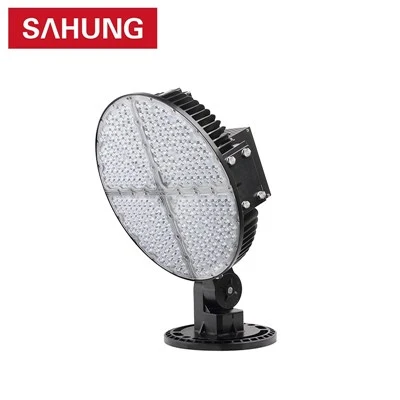
And for anyone still questioning this, do a quick test next time you drive through a tunnel: glance at the stop signs, brake lights, road signs. Notice if they look true to color, or if something feels off. That’s CRI doing its job, for better or worse. At the end of the day, tunnel lighting is all about keeping drivers safe, and CRI is a huge part of that—so pick it wisely, not just for the number, but for what your tunnel actually needs.
LED Flood Light References:
- International Commission on Illumination (CIE) 88:2004, Lighting for Tunnels and Underpasses
- Illuminating Engineering Society (IES) RP-22-20, Recommended Practice for Tunnel Lighting
- Journal of Transportation Engineering, Volume 142, Issue 5, 2016, Evaluation of Color Rendering Index Requirements for Road Tunnel Lighting
Hangzhou Shanghong Electronic Technology Co., Ltd.
We are one of the most experienced led tunnel light manufacturers and suppliers in China. With a professional production team, we offer a wide range of products with superior quality. Please feel free to wholesale custom made led tunnel light from our factory.
Address: 5F, Building A, No.7 Xiyuan 2nd Road, Xihu District, Hangzhou City, Zhejiang, China.
E-mail: sales3@sahung.com
WebSite: https://www.sahung-light.com/
